

Every time we go online, AI is there. Whether we want it to or not, AI is becoming part of our everyday lives. In many cases, it is incredibly convenient—the machine knows! In other situations, it’s enormously unsettling—how can a machine know that? And then there’s the question: Are there other forms of intelligence besides AI?
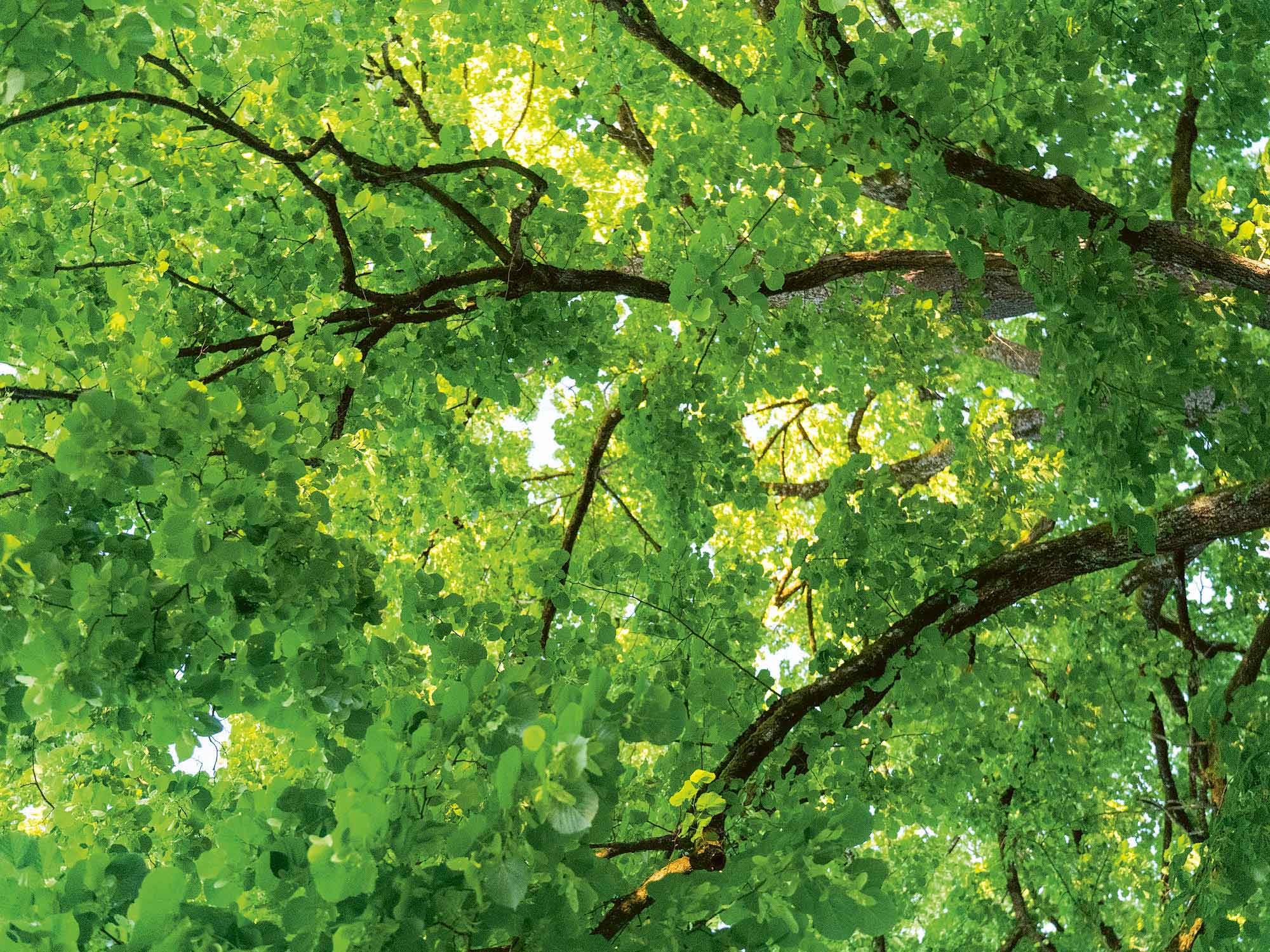
There is the intelligence of life. Ernst Zürcher knows this.1 Trees are living witnesses to annual rhythms, pulsations of cosmic forces. They are also receptive to seasonal rhythms, above all the rhythms of the moon. With the sun as its heart, the cosmic organism pulsates, and trees live in resonance with this cosmic intelligence.
What becomes perceptible to our normal intellectual thinking on the cosmic scale is now becoming comprehensible on the microcosmic scale through microbiome research. There is microbial life below the threshold of visibility that connects everything which only appears to be separate. For instance, these microorganisms provide an extracellular connection for plant roots to the soil. However, they can also swarm into cellular tissues in the area of the hair roots and act within the cell. The idea that individual living beings exist side by side in clearly demarcated boundaries is currently being radically challenged.
Both macrocosmically and microcosmically, a world of relationships, rhythms, and resonances emerges. Life is not static but processual; it is not centered but peripheral; it is not linear but cyclical. That does not mean life is imprecise or vague. On the contrary, it is more precise than our conceptions ever imagined. It is intelligent.
Can we work with this intelligence of life—in agriculture, nutrition, and medicine? I believe we can learn to do so. To do this, we need our human intelligence—an intelligence capable of creativity. It stands in polar opposition to artificial intelligence and transcends the intelligence of life. It is the intelligence of freedom, coupled with the will to work creatively with life.
Translation Joshua Kelberman

Footnotes
- See Louis Deféche and Ernst Zürcher, “And What If Life Came from the Stars?”, Das Goetheanum English Issue 2026/25-26.





yes its almost hard to fathom that such a simple word “Life” is actually the source of itself seeking consciousness of itself through humanity ..