

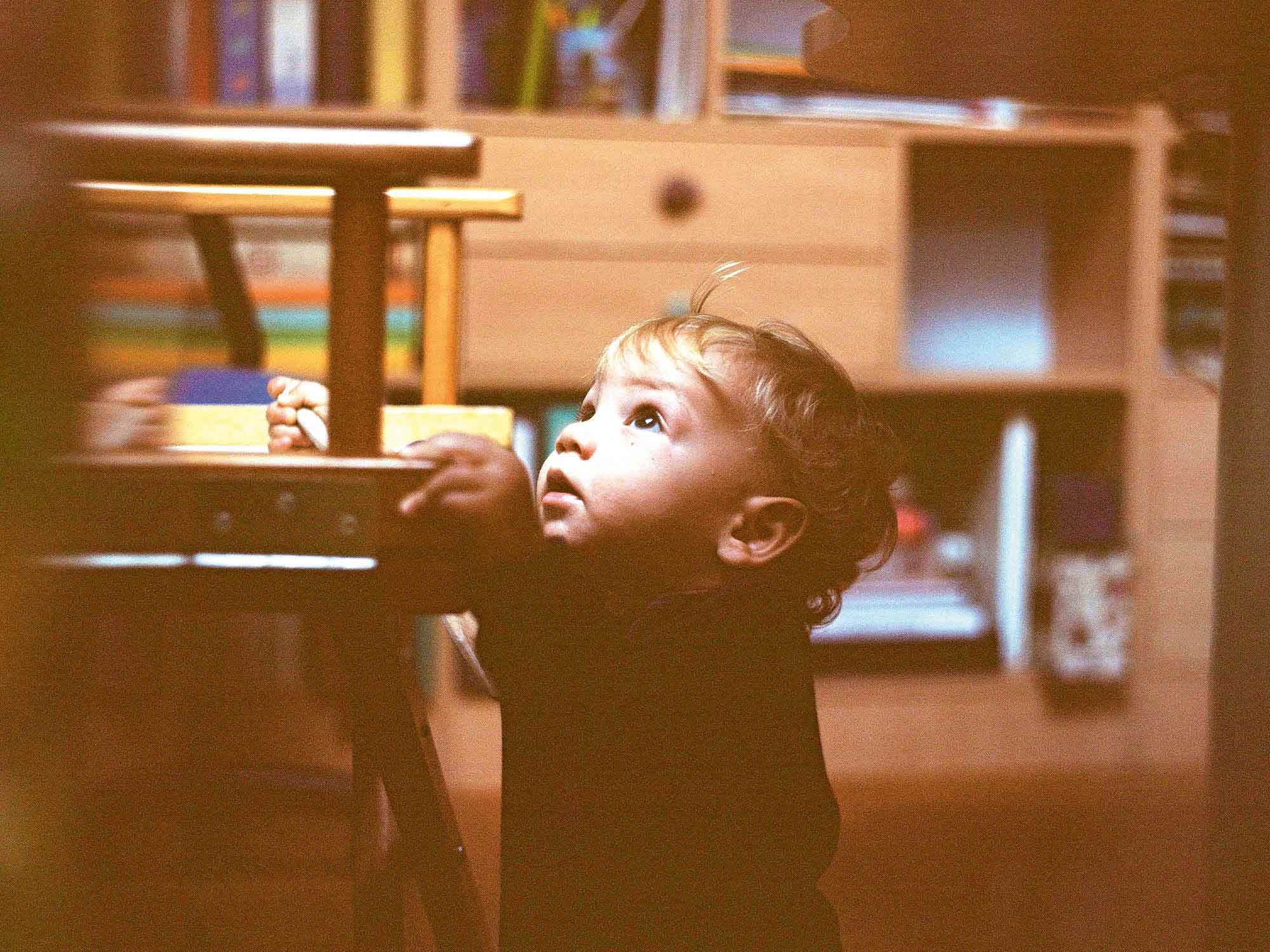
UNICEF, the United Nations Children’s Fund, has released its 2026 report on child well-being. Germany is in 25th place out of the 37 countries evaluated. How is that possible?
When children are having fun, it sometimes means that adults aren’t. As soon as children can stand, they’re off and running, jumping, and climbing; they get dirty and fall down; they turn the house upside down; and they ask questions or need help right when we’re busy with an important Excel spreadsheet. They also don’t learn the same way that adults do through transmission of information. They learn best when the material is presented with feeling, creativity, and hands-on experiences. As teenagers, they become completely enigmatic: they’re lethargic and/or hysterical, and they need conversation and authenticity from adults, even though they might act as if they want nothing more to do with us.
Are children just a bother? A growing number of adults no longer want to have children. In Germany, the situation is as follows: “In 2024, the number of births fell to 677,000, compared to an annual average of 759,000 from 2014 to 2023.”1 The trend is similar in many Western industrialized nations. There appears to be a correlation with education and prosperity: where adults enjoy both, fewer children are born. Globally, the trend is clear: according to a study by the Institute for Health Metrics and Evaluation (IHME), the birth rate in almost all countries will fall to the point where more people die than are born. Except in a few poor countries with limited educational opportunities, such as Samoa, Somalia, Tonga, Niger, Chad, and Tajikistan.2 Does this reflect cultural progress, emancipation from our animal nature, or the capacity for individual self-determination? Or is it a tendency to focus primarily on ourselves when we’re well off?
Would it be inconceivable to have strong cultural or academic interests, a decent income, and at the same time enjoy sharing all of this with children and young people? Or does what Goethe says in Wilhelm Meister about the relationship between consciousness and action apply to having and raising children: “There are few who possess insight and are at the same time capable of action. Insight broadens but paralyzes; action enlivens but limits.”3
For people who don’t have to worry about how they’ll pay the heating bill at the end of the month, raising children and teenagers can not only contribute to the future of humanity, but also help overcome the one-sidedness of life in an educated, affluent society. A little more lively practice, a little less sterile brooding, a little more improvisation, a little less control, a little more joy in life’s little things, a little less interest in sports cars, a little more connection, a little less self-indulgence, a little less wealth, a little more goodwill.
Do children bother us? We all struggle individually to find a balance between consciousness and life, conceptions and deeds, and, if we choose to have children, we first have to make room for them in our daily lives. Society as a whole faces the same challenges. Children are welcome only under certain circumstances. This is demonstrated in extreme form by the practice of bombing schools and kindergartens, which has occurred in various places. The mere fact of growing up as a child in this or that group is enough to cause one to starve or be killed. In other countries—less blatantly, but still cynically—the fact of being a child of low-income parents is enough to lead to abuse of the spirit, soul, and body. This is again demonstrated by the recently published UNICEF report on child well-being: “[S]tark inequalities within countries mean that children from poorer families consistently face higher risks of ill health, lower life satisfaction and weaker educational outcomes.”4
Germany, for example, is the world’s third-largest economy in terms of GDP.5 However, this does not mean that the group of people living below the poverty line is especially small. “[In 2025], approximately 13.3 million people in Germany had an income below the at-risk-of-poverty threshold . . . . This represented 16.1% of the population . . . . [In 2024], the at-risk-of-poverty rate was 15.5%,” states a paper by the German government.6 The children growing up in this demographic are directly affected in terms of their developmental opportunities. “The well-being of children in Germany is below average in an international UNICEF comparison,” the UNICEF report states.7
Who or what do we want to spend our time and money on? Weapons, computer technology, data centers, genetic engineering? We could choose something else. The authors of the UNICEF paper and the report on poverty and wealth are now recommending something similar to Emil Molt’s massive investment in the Waldorf School in 1919: More beautiful and suitable buildings for schools and kindergartens, improving the salaries and social status of educators and teachers, social education programs for young and single parents, establishing infrastructure for child-friendly living in neighborhoods, abolishing academic selection at the end of elementary school, not only promoting academic learning but also enabling an intensive social life for the child.8 As a Waldorf educator, one can only agree one hundred percent with all these recommendations. Also included is the idea of significantly increasing child benefits for low-income families—a measure that has always been rejected by the left for ideological and by the right for economic reasons.
In our affluent society, do we genuinely care about children’s well-being? Or does it remain merely a matter for analysis? This is a pressing question for Waldorf educators: How can we live up to Emil Molt’s commitment to social education today given that 44% of the world’s population lives on less than $6.85 a day?9
Translation Joshua Kelberman
Photo Mali Dasha/Unsplash

Footnotes
- Bundesministerium für Arbeit und Soziales (BMAS) [Federal Ministry of Work and Social Affairs], Lebenslagen in Deutschland: Der Siebte Armuts- und Reichtumsbericht der Bundesregierung [Living conditions in Germany: The federal government’s seventh report on poverty and wealth] (Berlin: Bundesministerium für Arbeit und Soziales, 2025), 37, accessed June 7, 2026.
- See Katarina Fischer, “Prognose: In Zukunft werden in den meisten Ländern zu wenig Kinder geboren” [Forecast: In the Future, Too Few Children Will Be Born in Most Countries], National Geographic (June 30, 2025), “According to estimates, the TFR [Total Fertility Rate] will fall below 2.1 by 2050 in 76 percent of the 204 countries studied. By 2100, the fertility rate could fall below the replacement level in 97 percent of these countries. Population growth is projected for only six countries—Samoa, Somalia, Tonga, Niger, Chad, and Tajikistan. However, the fact that birth rates are expected to rise precisely in resource-poor, low-income countries exacerbates existing problems and creates new ones.”
- Johann Wolfgang von Goethe, Wilhelm Meister’s Apprenticeship (Princeton, NJ: Princeton University Press, 2024), bk. 8, ch. 5; first published in German, 1795/6.
- UNICEF Office of Strategy and Evidence – Innocenti, Unequal Chances: Children and Economic Inequality, Innocenti Report Card 20 (Florence: UNICEF Innocenti, May 2026).
- Marcus Lu, “Ranked: The World’s 50 Largest Economies by GDP in 2026,” Visual Capitalist (January 8, 2026).
- Statistisches Bundesamt (Destatis), “16,1 % der Bevölkerung in Deutschland sind armutsgefährdet” [16.1% of the population in Germany is at risk of poverty], Pressemitteilung Nr. 039 (February 3, 2026).
- UNICEF Deutschland, “UNICEF-Studie Kindeswohl 2026: Deutschland fällt im internationalen Vergleich deutlich zurück” [UNICEF child well-being study 2026: Germany falls significantly behind in international comparison], Press Release (May 14, 2026).
- See footnote 1, p. 397: “In the context of unequal educational opportunities, reducing the early stratification of students by school type continues to be cited as an important starting point. International comparative studies confirm that the German school system, with its comparatively high level of stratification, exhibits greater disparities in academic performance based on socioeconomic background.”
- World Bank, Poverty, Prosperity, and Planet Report 2024: Pathways Out of the Polycrisis (Washington, DC: World Bank, 2024).





