

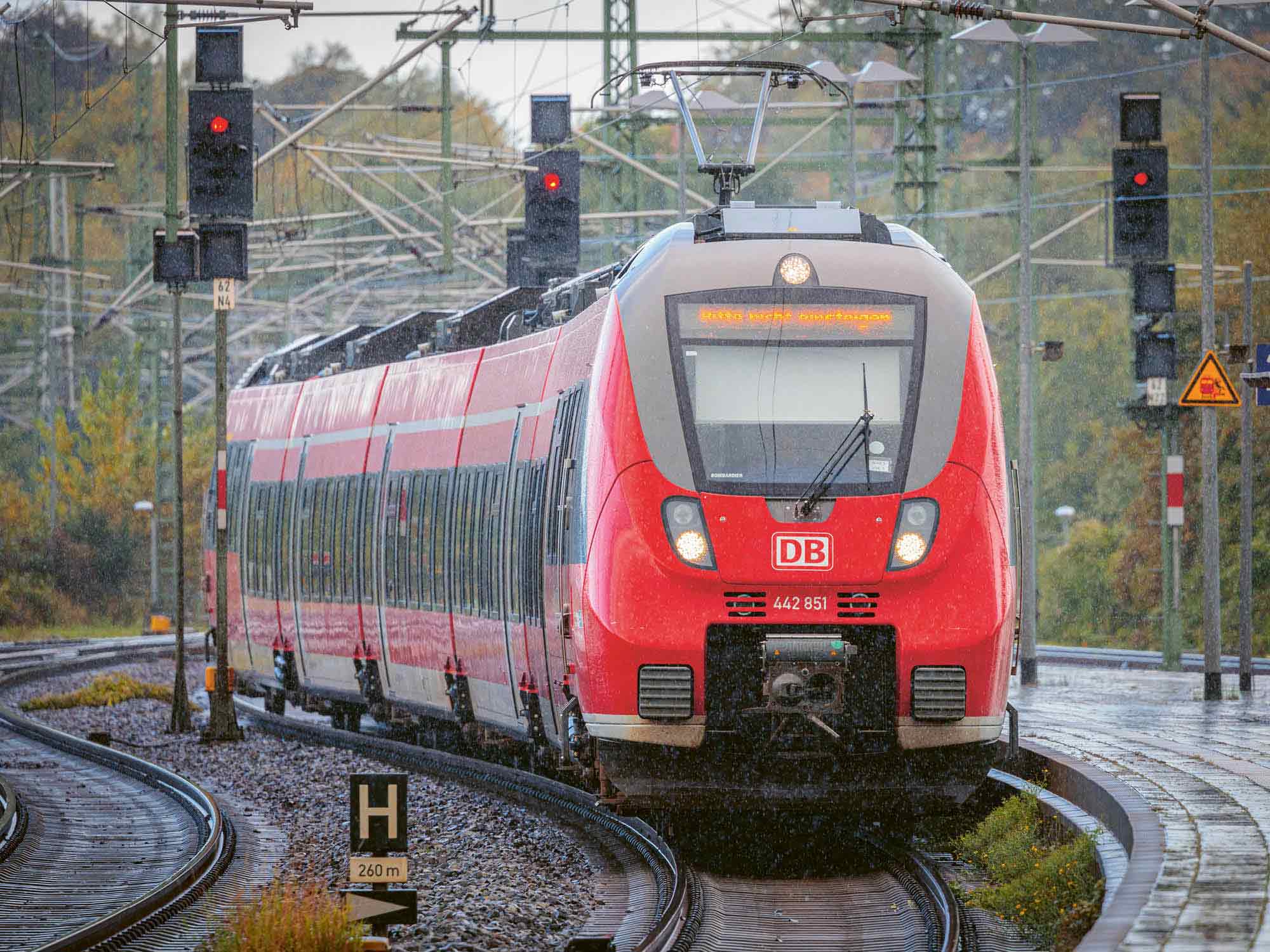
The first train is already delayed, and I’m waiting on a crowded platform in Germany, on a hot Friday in June. So many soldiers! I haven’t seen that in a long time. Female soldiers, too. They stand alone and don’t talk to anyone. They look serious. They’re young. Faces with their whole lives ahead of them. The last time I saw such a large military presence was when I was a child: fighter jets roaring across the summer sky, tanks on the sparsely traveled highways of East Germany in the 1980s, the “Lied gegen die Neutronenbombe” [Song Against the Neutron Bomb] in music class. I can’t find a seat on the train and end up in the corridor, which isn’t air-conditioned. I sit on the floor with two female soldiers surrounded by suitcases and backpacks. When the heat becomes almost unbearable, one of them says, “It’s my job, after all, to put up with this.” Images from war movies flash through my mind. My brain realizes, with a sense of unease, that these two young women could really end up in a trench. I reply, “Mine too!”
A four-hour delay—standing, sweating, trash-strewn aisles, lines of people waiting for free water at the onboard bistro. It seems we’ve left our comfort zone. And everywhere, figures in camouflage squat on the floor. Their presence feels oppressive. And yet, at the same time, they seem so vulnerable as they crouch there, withdrawn into themselves. I don’t know if something is brewing, but I don’t want these young people to have to go through what my grandfather and all those soldiers went through—and were never able to talk about. What I can do in this exceptional situation on an overheated train is to remain calm, friendly, and focused on human connection. And to be honest, quite a few people are doing just that in this “post-comfort zone.”
Photo Mihail Cioinica
Translation Laura Liska






