


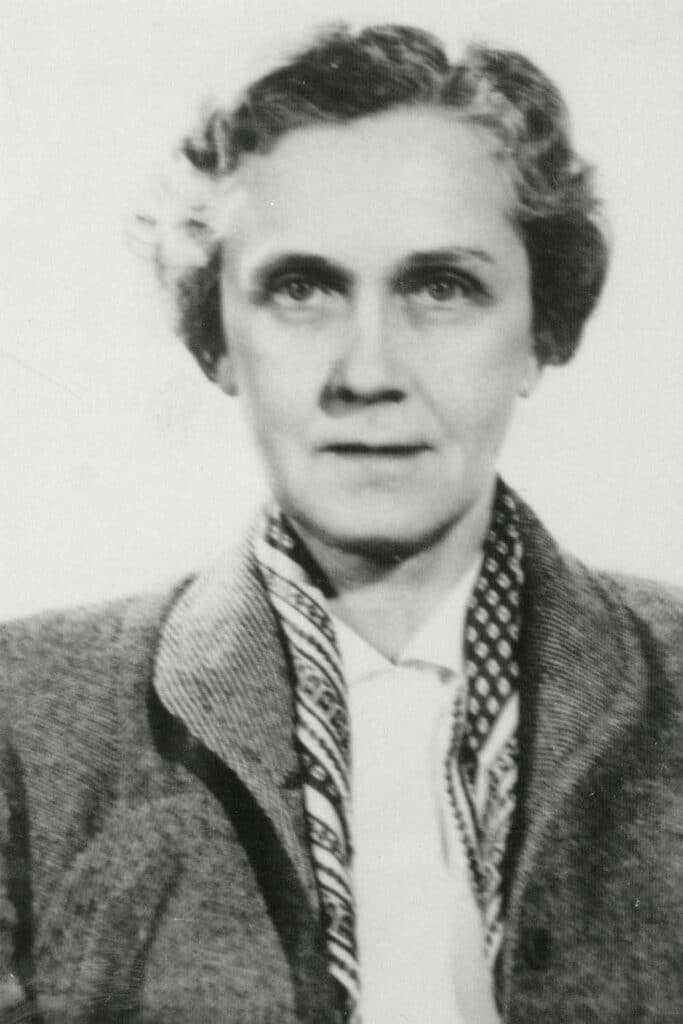
The first Waldorf school required all available forces. A place for the youngest children was simply not considered important in the socio-cultural understanding of the time. That the kindergarten exists, we owe to Elisabeth von Grunelius. She even financed it entirely herself.
In September 1919, the first Waldorf School opened in Stuttgart with 253 students in eight grades. Emil Molt, the school’s founder and financier, hired eight class teachers and four subject teachers. Starting in 1920, the upper school was gradually established, and in 1924, 17 students took their end-of-school university entrance exams [Abitur] at the school for the first time. Due to the large number of students, classes had to be split into halves or thirds. By the second school year, the student body had already grown to 420 students; by 1925, there were 784 students—a threefold increase within just a few years. The introduction of new subjects (such as woodworking, gardening, and physical education) required the hiring of many new teachers. Karl Schubert’s education for special needs class was established, and the school physician Eugen Kolisko took up his work. The development of the new school proceeded with breathtaking momentum. So why did it take until 1926 for the kindergarten to come to life? Why wasn’t the kindergarten the first thing to be established in Stuttgart, from which the school could grow organically?
Learning Without Self-Awareness
Long before the school was founded, Rudolf Steiner wrote about the extraordinary significance of early childhood, about how formative the first years of life were for a person’s entire life story. He understood the young child as an actively learning being who develops fundamental abilities such as walking, speaking, and thinking through inner forces that are not biologically inherited. The highest spiritual beings and forces reveal themselves in these basic abilities that ultimately make a human being a human being and must be acquired through a process of learning. Their pace of development bears no comparison to later learning achievements. In the first years of life, the child learns without yet having full self-consciousness. They first become aware of themselves as an ‘I’ in the third year of life; this is an indication that, here, there is a spiritual ‘I’-being who comes from a pre-birth existence. In a central chapter on “The Essence of the Human Being,” in one of his foundational works, Steiner quotes the poet Jean Paul as he recounts the discovery of ‘I’-consciousness in his early childhood. For Steiner, this is a fundamental anthropological fact, “for this ‘I’ is the human being himself [. . .] body and soul devote themselves to the ‘I’ in order to serve it; the ‘I’, however, devotes itself to the spirit so that the spirit may fill and fulfill it.”1 The ‘I’ of the child is the foundation for the force of self-development, which, in turn, motivates the most intensive learning and lays the groundwork for the entire course of life.
The corporeal and organic structures crucial for soul and physical health develop during the time before the child enters school. Steiner, therefore, urged educators to apply elements of free play and imagination, imitation and role modeling, rhythm, and movement with the utmost care. As early as 1907, he published these views in his first pedagogical work, “The Education of the Child from the Viewpoint of Spiritual Science,” in which he unequivocally expressed his readiness to provide much more in the way of concrete pedagogical instructions upon request: “Of course, these things can only be touched on here, but in the future, spiritual science will be called on to give the necessary indications in detail, which it is in a position to do. [. . .] spiritual science, when called on to build up an art of education, can indicate all these things in detail, even specifying particular forms of food and nourishment.”2
Given this background, the question arises all the more: why did it take until 1926 for the first Waldorf kindergarten to be christened?

Not Self-Evident Education
To answer this question, we must first call to mind that, in Germany after World War I, education in kindergartens was by no means self-evident. They were primarily regarded as social welfare institutions intended to relieve the burden on working mothers (including single mothers) or working-class families. They were run by churches and charitable organizations. There were hardly any educational goals for preschool-aged children. Their prevalence was correspondingly low: only about ten percent of preschool-aged children attended a kindergarten. Early childhood was not yet recognized by society as an independent, educationally significant phase of development.
The founding of the first Waldorf School in 1919—like all schools—was primarily aimed at fulfilling the educational mandate for school-age children. Emil Molt wanted a unified school [Einheitsschule],3 open to children from all social classes. At the same time, in line with social threefolding, he sought to establish independent schools that would make a decisive contribution to social renewal. Kindergartens were not yet under consideration at that time. The concept of the school absorbed the full attention of those involved. They had to contend with enormous financial hardship, cramped quarters, staff shortages, and hostile attacks. In comparison, the idea of a kindergarten seemed secondary.
On June 12, 1920, however, Elisabeth von Grunelius (1895–1989) appeared among the members of the school collegium and, to everyone’s surprise, reported on a kindergarten with thirty-three children. It is no longer possible to reconstruct exactly how this came about. At the time, it was called a pre-school [Vorschule], which was attended by about half of the children who would then be taught in the first two grades after the summer vacation. The report on the first school year also includes the following note: “In May, a provisional kindergarten was established, with Miss Elisabeth von Grunelius, a state-certified youth leader from Alsace-Lorraine, taking up the leadership. It was established primarily so that children who were becoming subject to compulsory schooling at that time could be provided with pre-school education before they would be taken into our school in the fall.”4 And from the report on the second school year, we learn: “The kindergarten led by Miss von Grunelius in the summer of 1920 could unfortunately not be continued due to a lack of space. It will have to be re-established later.”5
It was likely Steiner himself who suggested inviting Grunelius to Stuttgart, as he knew her from the time of her involvement in the construction of the first Goetheanum in Dornach. Grunelius had first-rate training in kindergarten pedagogy, and from the very beginning—and consistently thereafter—it was Steiner’s wish to supplement and complete Waldorf school pedagogy with Waldorf kindergarten pedagogy. It became clear, however, that a kindergarten was not yet feasible at that time, and all forces had to be directed toward managing the school’s tasks. For this reason, Grunelius was asked to assist second-grade teacher Leonie von Mirbach. When this class of 52 students was split into two groups in the third school year, and Mirbach had to step down for health reasons, Grunelius took up one half of the class, but led it for no longer than one school year, until May 1922.
The Kindergarten Is Awfully Desired
Both at the conference and in public lectures, Steiner reiterated the intention to establish a kindergarten in Stuttgart himself as soon as the opportunity arose. And at the end of the third year, he added: “The kindergarten is awfully desired.”6 When, in September 1922, Steiner wrote a brief report on the establishment of the Stuttgart School, his description ended with the sentence: “When circumstances permit, a kind of kindergarten is to be added on later.”7 But nothing happened, so Grunelius gave up hope of establishing a kindergarten in the foreseeable future. She decided to leave the school and study eurythmy and painting in Dornach until more favorable circumstances arose.
In 1923, Steiner commented again on how “the most important educational work” must be carried out in the kindergarten and how Waldorf education would only be complete “once this pedagogy for the early years of the child has been developed.”8 That it was not yet possible to practice Waldorf education during the years prior to entering school caused him “extraordinarily great concern.”9 He considered it enormously important “to make the whole thing more complete at the lower end as well and to patch it up with a kind of kindergarten.”10
Steiner himself did not live to see the kindergarten established. It was only after his death in March 1925 that things began to move forward. During a Pentecost conference in 1925 at the Goetheanum, Herbert Hahn discussed the matter with Ita Wegman. Immediately after the Pentecost festival, it was discussed at the pedagogical conference of the Stuttgart collegium with Ita Wegman present. Herbert Hahn communicated the outcome to Elisabeth von Grunelius (who was not yet in Stuttgart at the time) in a letter dated June 17, 1925: “The collegium, in agreement with the Dornach Executive Board, will regard your pedagogical work as a matter that is integrated into the larger framework of the Waldorf School’s pedagogical activities and supported in all fundamental questions of establishment and further development by the full responsibility of the Waldorf School collegium. [. . .] Your position within this larger pedagogical organism is as free and independent as that of any member of the Waldorf collegium. [. . .] The prospect that, through your initiative and your preparatory work, the realization of one of Herr Dr. Steiner’s cherished ideas is now drawing so near is welcomed by our collegium with the warmest joy. Likewise, I know from my meeting with Dr. Wegman that your work is supported with the utmost approval from Dornach. I was able to see during the discussions at the school how gladly our colleagues wish to stand by your side—wherever and whenever you may ever wish—with their advice and collaboration.”11
On One’s Own Account
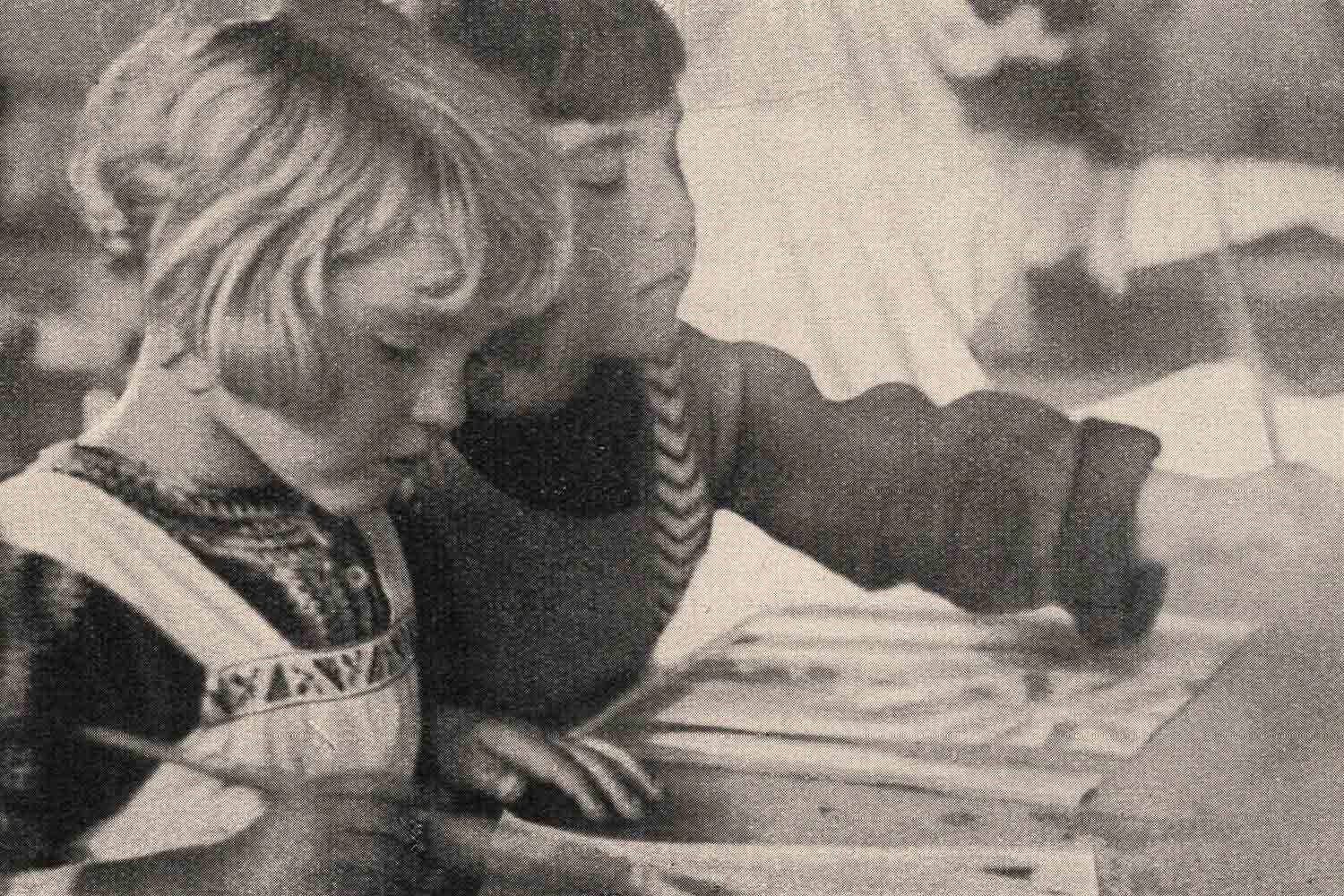
In his letter, Herbert Hahn also hints that Grunelius had decided to take on the establishment of the requisite kindergarten building “on one’s own account”! It may be presumed that the financial possibilities were connected with von Grunelius’ family of financiers. Karl Stockmeyer, who was in charge of the Waldorf School Association [Waldorfschulverein], then took over the economic and organizational aspects a few days after Hahn: “Our proposal is now that you simply transfer the money at your disposal to us, and we will use this money to set up the kindergarten, naturally, in such a way that you yourself specify in every detail how the facility is to be shaped.”12 Grunelius led this in every detail, right down to the pile of fine sand she had ordered through Stockmeyer for the kindergarten.
With that, the contours of what is possible to reconstruct of the historical picture of the kindergarten’s beginnings in Stuttgart are complete. The quiet and modest, but also joyful and diligent work with the young children had begun at last. There was no time, though, to write reports. In the anthroposophical journals and also in the school’s publications from the 1920s and 30s, there was no article on the kindergarten. We actually learn nothing about the daily life of any kindergarten in the pre-war period. At the time, there was probably no consciousness whatsoever that a significant step toward an innovative educational future was being taken. The fact that the idea of a Waldorf kindergarten was ultimately able to become a reality is due less to favorable circumstances than to the perseverance and self-sacrifice of Elisabeth von Grunelius.
More World Early Childhood Conference at the Goetheanum, 2026
Translation Joshua Kelberman
Title image Kindergarten class led by Elisabeth von Grunelius (right)

Footnotes
- Rudolf Steiner, Theosophy, CW 9 (New York: Chadwick Library Editions, 2019), §I.4.
- Rudolf Steiner, “The Education of the Child from the Viewpoint of Spiritual Science,” in The Education of the Child and Early Lectures on Education, translated by George and Mary Adams (Hudson, NY: Anthroposophic Press, 1996), 20, 22; first published in Lucifer-Gnosis, no. 33; now in GA 34 (forthcoming in English).
- A “unified school” [Einheitsschule], refers to the German school model that includes all groups of students, regardless of academic path or family situation, in contrast, to other models, including, for example, farmer/peasant schools, worker/bourgeois schools, and pre-university schools (related to the Gymnasiums) [Bauern-, Bürger- und Gelehrtenschulen], which were exclusively attended by students from different family situations or prepared students for specific academic paths—Trans. note.
- Freie Waldorfschule e. V. Stuttgart, Bericht über die ersten zwei Schuljahre 1919/20 und 1920/21 [Report on the first two school years], 11.
- Ibid., 175.
- Rudolf Steiner, Faculty Meetings with Rudolf Steiner, vol. 1, CW 300b (Hudson, NY: Anthroposophic Press, 1998), 344, meeting of May 10, 1922.
- Rudolf Steiner, “Das Goetheanum in Dornach und seine Arbeit” [The Goetheanum in Dornach and its work], Das Goetheanum 2, no. 8 (Sept. 24, 1922); now in GA 36, Der Goetheanum Gedanke inmitten der Kulturkrisis der Gegenwart [The thought of the Goetheanum amid today’s cultural crisis], 276.
- Rudolf Steiner, The Seasonal Festivals as Soul Experience: The Human Being in Relation to Individual Spiritual Beings, CW 224 (Spencertown, NY: SteinerBooks, 2025), lecture in Berlin, May 23, 1923.
- Rudolf Steiner, Gegenwärtiges Geistesleben und Erziehung [Contemporary spiritual life and education], GA 307 (Dornach: Rudolf Steiner Verlag, 1986), discussion Aug. 7, 1923, p. 258 f. (not translated in English CW 307).
- See footnote 8.
- Herbert Hahn to E. von Grunelius, June 17, 1925, Archiv der Waldorfschulen, 3.25.010.
- Karl Stockmeyer to E. von Grunelius, July 7, 1925, Archiv der Waldorfschulen, 3.25.011.





