

This year’s annual conference of the Medical Section at the Goetheanum focuses on trauma, development, and resilience. In the last of this three-article series previewing the September conference, we look at when and how we can become more resilient in a salutogenic (health-generating) way.
These articles began by thinking about a wound. The process for addressing a physical wound can be helpful for building a picture for the therapeutic process, even for traumatic experiences that are more social, sensory, or emotional.1 All healing processes include the possibility of a scar forming. When we see a physical scar on the skin, we know it marks the place on the body where an injury occurred. It tells us something about the extent, and even the age, of the injury. Emotionally, we also carry scars, but their location and age may not be so easy to identify. What is true for both physical and psychological wounds is that when scars form, they make that part of us a little bit tougher. Scars form to create a protective tissue, which is typically harder than the surrounding tissue, less flexible, but sometimes still quite sensitive.
Resilience arises out of an opposite activity to scar formation—more from flexible strength than from stiffness. It is less about forming, more about moving and adapting. Our forces for resilience are not in one specific part of the body, not concentrated in a single location or organ. Psychological research on resilience has recognized a combination of factors that influence an individual’s ability to cope with stress and maintain health. Known as Sense of Coherence (SOC), these factors are a global orientation, where life is understood as more or less comprehensible, manageable, and meaningful. From an anthroposophic point of view, these three factors—comprehensibility, manageability, and meaning—make good sense because they acknowledge the importance of the threefold human being, with capacities for thinking, willing and feeling.
When something is comprehensible, it means that we can make sense of it with our sensing, observational, and thinking processes. Comprehensibility relates to our head and to the system of our nerves and senses.
How manageable we find a particular experience has a lot to do with what kind of changes we are able to effect in a situation. Do we have the right tools (physical, functional, social, spiritual) to take hold and engage with a process? Manageability relates to our will and to the system of our metabolism and limbs.
Finding meaning in struggle entails that our feeling life is not numb—is not abandoned. Instead, our feeling life becomes multi-layered, such that—though we still feel shock or pain on a soul or astral level—there are still moments when we can also see a larger perspective. Our I-being touches-in and helps us gain insight about why something is happening, perhaps even with some glimmer about our role or responsibility. That dynamic, multi-leveled feeling activity for meaning finds its home in our chest, our heart, and our lungs—in the rhythmic system.
What’s essential to recognize is that a “sense of coherence“ does not rely on any one of those three measures, but on all three. It is the combined activity of our thinking, willing, and feeling which gives us strength. Just as we cannot cleverly think our way through all problems, we also cannot bulldoze our way through all obstacles with the will. Similarly, a feeling life, left alone without comprehension or manageable next steps, may simply spin in endless cycles of emotion. We rely on thinking, willing and feeling, just as our body needs a head, hands, and heart.
If we try to name one single quality or process that supports resilience, it is probably the quality of weaving. Steiner’s indications for spiritual development show us, in many different ways, how to actively and consciously weave the elements of our physical and spiritual self back together. For example, the six basic (or subsidiary, Nebenuebungen) exercises take us directly onto that path, starting with bringing will into thought, then thinking into activity, and out of those two streams creating a space for balanced feeling or equanimity. These are a spiritual practice we can work with to continuously reintegrate the different parts of ourselves, even when they have become separated by shock or hardened by scars. Resilience does not come from a substance, but from a process that we weave and practice over and over.
Here are three verses for weaving a garment that guards and guides us, so that we can find greater resilience, strength, and courage.
For head, chest and limbs:
Warmth is around me
Light, it streams into my head,
In calm strength
I sense it.
Air, it streams into my breast,
In calm strength
I breathe it.
Weight, it holds me to the earth,
In calm strength
I live it.
In light, air, weight,
Sensing, breathing, living,
Weaves my whole being.
Warmth is in me.
For weaving past, present and future:
The years flow past into the stream of time,
Leaving us with memories;
And in remembering, the soul
Weaves life together with life’s meaning.
Live the meaning, trust existence;
And universal life will join
The core of your being with its own.
For weaving between lower self and higher self:
To you, the divine in my soul,
I want to give space
In my conscious being.
You connect me to everything
That the power of destiny has brought to me
You will never release me
From what you have given
Me to love:
Your spirit watches over mine
Because it is also yours:
Thus I will watch with you,
Through you, in you,
What you have decided to do with what is yours.
I want to be strong, to know
That this is wisdom.
More Standing on the Abyss. Trauma, Development and Resilience, International Annual Conference of the Medical Section, September 16–20, 2026, Goetheanum, Dornach
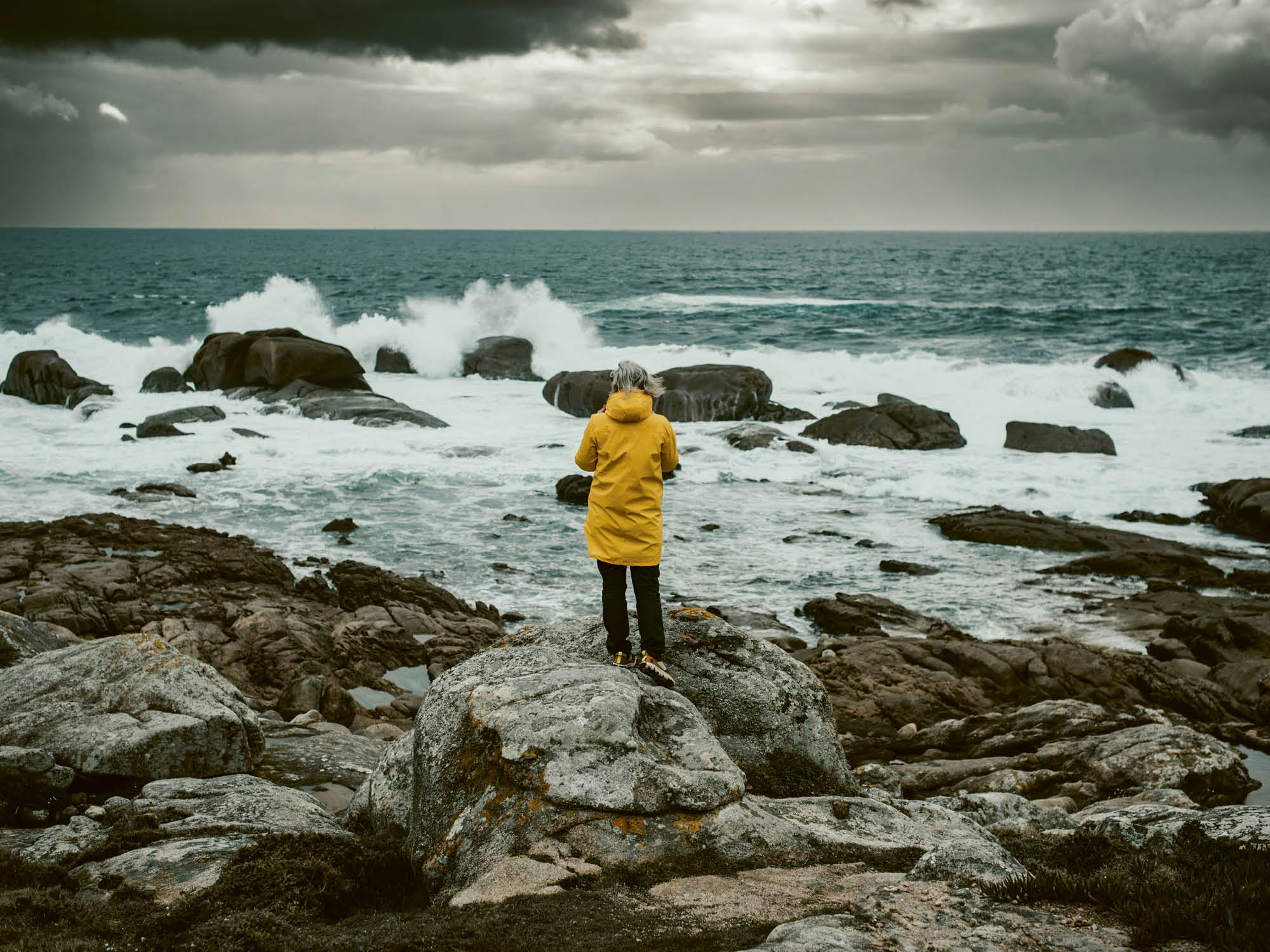
Photo Maksym Kaharlytskyi, unsplash

Footnotes
- Karin Michael, “Trauma and the Healing Force of Warmth”, Das Goetheanum English Edition 2026/33-34.





