

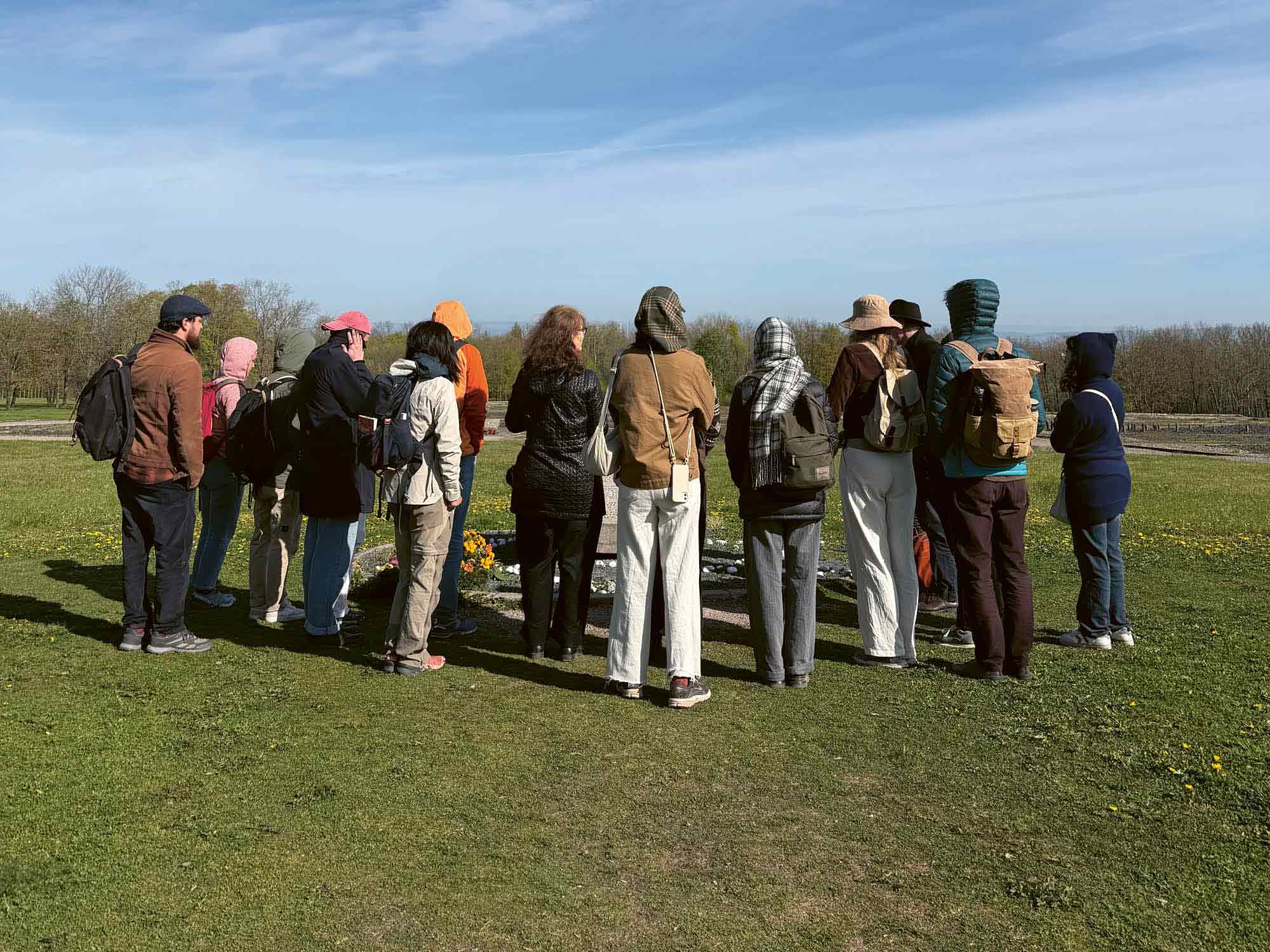
Weimar, Germany. At the beginning of the Goetheanum anthroposophy studies, participants travel to Weimar to explore Rudolf Steiner’s early biographical experiences in connection with the works of Goethe, Schiller, Nietzsche and the Bauhaus art school. An interview by Studies and Continuing Education Coordinator, Andrea de la Cruz, with Canadian student Owen Parker Hughes.
What brought you study Anthroposophy at the Goetheanum?
My Anthroposophical family, my time in Waldorf education, my dissatisfaction with the conventional college experience, and an interest in German philosophy and Steiner’s reception as a continuation of it. I had an interest in German idealism before and during the course my interest has expanded. Also, my interest in Steiner as a pedagogue, a comparative mythologist, his ideas of karma and reincarnation. And a desire to live in Europe, which was a big part of my coming here.
What role did the class trip to Weimar play in the study program from your perspective?
The theme of the trip for me was contrast—the way the 20th century, German history, tradition, and thought went in different streams. The trip posed how—in the Michael age—things can go astray, but also how the seeds of Anthroposophy were planted there and then.
It was also a further contextualization of Steiner’s origins and the cultural ground from which Anthroposophy emerged. These figures that we hear about in Anthroposophy—like Schiller or Goethe—they became more tangible. It shows a different Steiner, which is helpful: Steiner the archivist, the academic, the young man; Steiner before Theosophy in Berlin. You get to imagine Steiner in a small place developing his ideas of freedom and individualism, how he worked this path. The trip solidified and contextualized this. It is also an opportunity to spend time with two of the greatest living anthroposophists—Peter Selg and Constanza Kaliks—in a place where there are endless things to discuss, out and about, walking around.
The trip also takes place at the beginning of the trimester which is good because I think any trip brings people closer together, providing a way to make things fruitful for strangers moving forward as a group.
More Goetheanum Studium
Image Andrea De La Cruz






