


The topic of polarities came up in a conversation with Bodo von Plato on his research into aesthetics. Polarities constitute the world, and aesthetic practice can help raise them to a higher level. Bodo came to the conclusion that aesthetic practice is anthroposophy. We found these thoughts inspiring and invited him for another conversation to learn more about what he means by “aesthetic practice” and how it can be developed. Interview by Louis Defèche.
Louis Defèche: How do you understand “aesthetic practice” today?
Bodo von Plato: More and more, I see aesthetic practice as the ability to connect things that appear separated or stand in opposition. This is, for me, the most important characteristic of aesthetic practice. In Ancient Greek, aesthetics meant perception: sense perception and the subsequent inner sensation of the soul as it appears to consciousness. Yes, consciousness realizes, brings into awareness, the inward sensation in our soul that follows on from every perception through our senses. Aesthetics has the power to connect the sensory and the suprasensory with one another. Aesthetics is this connection. Sensory perception evokes something in humans and animals (perhaps also in plants?), a response, a reaction. Humans have the special ability to realize and to manifest this response as an inner sensation that then also arises in our consciousness. Working through this experience of becoming conscious of an emerging sensation following on from a sensory perception is the work of aesthetics; this is the field of aesthetics. Aesthetic practice consists of observing and reflecting, of processing, shaping, and furthering what we individually experience in our inner sensations that are triggered by our perceptions.
I took sense perception as a starting point here. This ties in with the classical Greek definition of aesthetics. But I’d like to go further and include the perception of soul and spiritual processes. Non-sensory perceptions also trigger inner sensations in the soul. They can also be realized in consciousness, processed, and become aesthetic experiences, out of which a corresponding practice can emerge.
I believe it’s obvious that much will change if we better understand and pay attention to this changing relationship, this three-step process of sensory and non-sensory perception, subsequent inner sensation, and the corresponding formation of consciousness. Much will change in our personal lives, in our interpersonal relationships, but above all in the Anthropocene, where everything depends on our human consciousness, on our actions, and also on what we don’t do.
Has the concept of aesthetics gone through a development in our time, through the experiences of humanity in the 20th and 21st centuries?
Since Plato, the concept of aesthetics has undergone considerable development, with a particularly significant shift in the late eighteenth century. This period is crucial for everything that concerns our disenchanted and globalized world. Reason and the Enlightenment proved their liberating power, though not without their accompanying destructive power; in any case, they showed a decisive power, and they also brought an emphasis on self-reflection. Aesthetics played a key role here. Friedrich Schiller discovered aesthetics’ previously unknown potential and described it in 1793 as the true, individual, and political means of human and social development. It was not until the late twentieth century that the existential, human-made social and ecological challenges revealed the potential of this discovery, which establishes a relevant relationship between perception, inner sensation, and consciousness—between life, beauty, and form.
But Schiller’s discovery did not bring about any manifest consequences in culture. To this day, aesthetics is commonly, and not unjustifiably, identified with beauty; in the academic world, its traditional field is primarily in art history, even if this has not been consistently true since the second half of the last century. However, an idealistic concept of beauty is deeply rooted in our Western sensibility. This concept sees beauty as when something higher, something divine, spiritual, or ideal, becomes visible, appears in the sensory world. The ideal is the important thing here; the sensory is of a lower nature, subordinate, merely an expression. From this perspective and with this understanding, an idealistic aesthetic asks and answers the question: “What is beauty?”
Completely different circumstances arise when the question of realistic aesthetics is posed, and an answer sought: “What makes something beautiful?” Then the activity itself becomes the starting point and the aim of aesthetic orientation—activity that leads from many possibilities to a specific reality; activity that also leads me to choose one interpretation of reality from the abundance of possible interpretations, one that determines my judgment and motivates my actions. Goethe and Schiller accomplished this radical shift from an idealistic-aesthetic determination to aesthetic experience. Both realized it in their creative lives, and Schiller even to the point of methodically founding a transformative aesthetic praxis or practice. But, to this day, this has remained largely unnoticed.

In the context of the Goetheanum here, I’d like to add that, very early on in his work, Rudolf Steiner recognized the significance of this fundamental change of perspective. It’s really astounding how clearly and simply he described this quite complex phenomenon back in 1888: “Beauty is not the divine in a sensory-real garment; no, it is the sensory-real in a divine garment. The artist does not bring the divine to the Earth by allowing the divine to flow into the world, but by raising the world up to the sphere of the divine.”1 This is about the experience we have here in the physical sense world—its active transformation and configuration. The aim is to transform sense reality in such a way that the spiritual significance of sensory existence can be expressed. This is the decisive factor that emerged in the late eighteenth century and was taken up and developed in Steiner’s anthroposophy more seriously in the nineteenth century than anywhere else. It pervades his entire work, right up to the founding of the Independent School for Spiritual Science, which was established precisely for this task: the creative transformation of the sensory-real world in a way that expresses this world’s spiritual dimension and allows its spirit to become effective.
In the 20th and early 21st centuries, many thinkers and artists followed, genuinely pursuing this same perspective, usually without explicit reference to Goethe, Schiller, or Steiner; examples include John Dewey, Ludwig Wittgenstein, Hannah Arendt, Walter Benjamin, Simone Weil, Rainer Maria Rilke, and John Berger; they were followed later by postcolonial thinkers such as Bruno Latour, Gregory and Mary Bateson, Wolfgang Welsch, François Julien, Juliane Rebentisch, Byung Chul Han, and Arnold Berleant, to name just a few who were especially significant for me. In this context in particular, it makes less and less sense to try to classify who uses what criteria; the nature of aesthetic coherence becomes much more essential.
You said earlier that spiritual and soul experiences are part of “perception,” but the duality of spirit and sense perception comes up as well. How do you see that?
Dualism is present in our conscious experience. The world is out there. I am here with my inner life, confronting the world. That is my (aesthetic) experience of separation. The (aesthetic) activity consists not in disparaging one side or the other or favoring one side in isolation, but rather in creating a unity in a monistic sense; not necessarily symmetrical, but rather where each contributes something unique; a unified world of which I am a part, which is part of my Self. The same applies to soul and spiritual phenomena. When I have an experience, I am the one who has it—the experience and I are two. Whether this remains dualistic or not depends on how I handle the experience, on my vita activa, my life of activity, on my aesthetic practice.
You mention “vita activa.” Is there also a strong dimension of “vita contemplativa,” the life of contemplation, in aesthetics?
Experience describes the part we receive. This becomes culture in the “vita contemplativa.” How do I learn to receive what is to be received? How do I learn “non-active action” (Simone Weil)? “Non-active action” is a formulation in aesthetics that seeks to describe this inherent contradiction as a whole in order to bring it forward as a question. At the core of aesthetics is an irreconcilable contradiction. Action and inaction. But it is precisely this “non-active action” that Weil describes as the “vita contemplative.” The “vita activa” consists in my being aware of this, accepting it, and dealing with it in an open-ended manner. This is an aesthetic experience that slowly becomes aesthetic practice as I begin to produce something in this attitude, a feeling, or a concept, an attitude, a judgment, or an action.
You recently described the correspondence between aesthetics and anthroposophy. In what way are they the same for you?
Doesn’t the originality of anthroposophy lie in the fact that it proceeds from the reality of spiritual effectivity (the origin of which does not appear in our present, ordinary consciousness)—that anthroposophy makes suggestions for conscious activity in order to expand this consciousness in a realistic way? We have forgotten that gods and spirits live around us and with us, and so it’s self-evident that we must proceed from the assumption that we live in a world that has been de-divinized and de-souled, a world that functions according to primarily mechanical and chemical laws without knowledge of being, without taking into account the essence of beings. We try to get to know how these mechanical and chemical functions operate, to reproduce and optimize them, and we create a corresponding human-made world—only to very quickly find ourselves increasingly alienated from it and from ourselves. We see and begin to comprehend that the other kingdoms of nature, indeed our entire Earth, will not survive in this way. Anthroposophy proceeds from the fact that there is a spiritual world but takes seriously that it does not appear in normal human consciousness and suggests that we become active. If we take up the suggestion to actively observe our active consciousness in order to independently develop it further in accordance with our observation, the experience of active beings begins to grow within this space of consciousness—beings that include other kinds of being, not only ourselves and other human beings, beings with whom reciprocity and communication become possible. If we accept this practice as decisive for anthroposophy, then it would be quite similar, if not identical, to the realistic aesthetics outlined above.
Or to put it even more simply: aesthetics lives in the connection between polarities such as form and substance, spirit and matter. Their interpenetration, reciprocity, and creative effectiveness are its life, just as they are in anthroposophy.
There is a difference between truth and beauty. In anthroposophy, we tend to classify them both as “truth.” For example, when you read an anthroposophical book, you don’t usually consider it an aesthetic practice.
When we look at the great metaphysical triad of truth, beauty, and goodness, the relationship between truth and beauty seems especially interesting because of their seemingly different relationships to the objective and the subjective. With truth, we probably feel most strongly that it is valid in and of itself, that it is independent of individual opinion. Today, the diversity of truth is often emphasized; everyone wants to have their own truth. People want to avoid the truth’s claim to absoluteness, especially those who end up actually claiming this absoluteness themselves. Beauty, on the other hand, is generally assumed to have something to do with sensations and feelings, where everyone is allowed to find something beautiful even if someone else may not. However, one of the fundamental questions of aesthetics is whether beauty can be determined by personal feeling simply because it arises within as an inward sensation and experience, whether subjective or objective in nature. Regardless, an attitude of tolerance, of taking into account individual, personal circumstances, is considerably greater in the area of beauty than in truth. There lies the opportunity of beauty.
And yet, this doesn’t remove the challenge of deciding whether I want to live alone in my conceptions, whether I want to build them up and conserve them, or whether I’m prepared to enter into a reciprocal relationship with the world, with everything that I encounter externally and inwardly.
Beauty and art always have this dual nature: on the one hand, they allow me to sense and judge entirely as individual, according to my own preconceptions, my own longings, and my own tastes, while at the same time, there is always something in beauty and art that transcends my personal self. Whether and how I experience this shift to different levels determines my artistic or aesthetic sense.
Truth is also quite acceptable so long as we take a truly scientific approach, questioning and investigating things with an open mind, truly open to whatever we may find as the result. When the actual process and activity of cognition and knowledge is in the foreground and we’re not only searching for whatever the result of these processes may be, then the question of truth has almost exactly the same chance of finding a personal and objectively appropriate balance between subject and object as does beauty. However, with truth, we’re more likely to identify with its final state of existence and not its processual nature; with beauty, it seems to me to be rather the reverse.
When it comes to goodness, we encounter other difficulties because we’re affected much more strongly and concretely by actions and their consequences. It’s also easier to fixate our evaluations of actions—if I act well and my action is considered good by others, the impression is so powerful that I actually have little opportunity to hold back my judgment of this action. This makes it easy for a normative morality or ethic to crystallize. It leaves little room for freedom with regard to the good or goodness—indeed, as soon as an ethics starts to characterize specific principles for what is good, it can become totalitarian even more quickly than truth can become dogmatic.
When totalitarianism threatens goodness and dogmatism threatens truth, beauty quietly retreats. And where beauty isn’t valued, or is valued too little, kitsch and caricature appear in its place.
So, back to your question: To me, anthroposophy actually seems just as interesting from the point of view of truth as from the point of view of goodness. As an agricultural, educational, or medical practice, anthroposophy has found much more acceptance than simply as a philosophy. It’s certainly the least explored and most untouched from an aesthetic point of view—perhaps touchability and untouchability are also characteristics that aesthetics and anthroposophy have in common?
To what extent can aesthetic practice play a central role in the 21st century, right now in the year 2025, in the midst of the current crises and wars?
In her public work, Maya Göpel occasionally asks whether listeners would rather live in a society led by Bezos, Zuckerberg, Musk, and their ilk, or by Gandhi, the Dalai Lama, and other ethically and spiritually vibrant people.2 Of course, everyone prefers the latter but reality is the reverse. I believe we’ve reached a critical moment. How do I deal with the growing contradictions of existence in the 21st century? This contradiction has a lot to do with the fact that our consciousness, the interest and attention of all humanity for the material aspects of existence, has grown considerably. And this gives power to those who can respond to it; capitalism is obviously the best form for this. The other aspects that this rapidly growing consciousness comes into contact with are largely suppressed or absorbed in an overly idealistic, one-sided way. We, and probably most readers of Das Goetheanum, naturally long for these other aspects: democracy and self-determination; environmental protection, sustainability, and respect for natural life connections; spiritual development; and, above all, humane, sensitive, and attentive manners. The gap between this longing and the increasingly warlike ways of life and economic practices of recent years and decades is obvious.
Unfortunately, however, there’s unlikely to be an aesthetic revolution, however necessary it may be. The aesthetic dimension depends on development and interaction; it cannot be enforced. Following Schiller’s approach, I’d put all my eggs in the education basket, given the current economic, ecological, and power-political impasses. Not in one particular educational ideal, but in the diversity of concrete practices in education, art, and culture. Wherever an interest in the visual arts or a creative Eros is evident, there’s a need for openness, encouragement, and support instead of doubt, skepticism, or know-it-all attitudes. Aesthetic orientation puts educational initiatives and institutions at the center. Humboldt, for example, shaped education across the world, and his ingenious ideas continue to inspire us today. Dewey and Steiner not only saw philosophically and spiritually complex possibilities and brought them to fruition, but they were conceptually and practically involved in the school system and advocated political change. Yes, perhaps model examples can achieve more than new systems. Human beings learn by seeing; we see things that we like or that impress us; we strengthen something or someone through our affirmative gaze; we encourage something or someone through our affirmative feelings; we open things up through our uncertainties and questions. Strengthening, encouragement, and openness are effective qualities of aesthetics. Luisa Neubauer, for example, seems to have a beneficial effect in this way, humanely, journalistically, and socially. An aesthetic practice takes concrete possibilities seriously; it doesn’t make big plans; it’s not dependent on success; and it lives from out of itself, without revolving around itself alone.
Another field is the design of everyday objects. Design and product design have revolutionized life. However, truly aesthetic design remains the preserve of the elite. The key question, in my view, is whether and how the aspect of beauty can become a serious viewpoint in public discourse and in broader political and economic practice. Today, except for luxury items, beauty is not valued in the same way as functionality, feasibility, efficiency, profitability, or sustainability. One example is the future of our cities. Current urban planning ideas and models integrate natural and living elements such as water or plants in order to meet climatic requirements. At a recent exhibition in Berlin on cities of the future, almost all of the designs presented showed an awareness of ecological aspects that would have been unthinkable ten years ago. They are aesthetic in that they combine different elements and viewpoints in such a way that a livable, more diverse environment is created. It’s puzzling that design language remains monotonous; more depressing is that normal everyday construction remains far removed from these ideas—beauty and livability are not points of reference.
However, it’s precisely in the concepts of sustainability and ecology (like certain other concepts of the twentieth century) that we can see how an aspect that was initially irrelevant or ridiculed can gain influence within the space of a few decades. Even if the concept of sustainability often serves as a façade today, its influence has grown considerably. Thinking about, discussing, questioning, and investigating the concept of aesthetics will also contribute to it one day helping to effectively shape the reality of human life.
To summarize: perhaps, this means that aesthetic practice—whether through education, the design of our environment, or simply through the formation of concepts—belongs at the heart of the challenges of the present. In this sense, aesthetic practice is actually a political perspective. I don’t think that it will end the perpetual wars. However, I do believe that the more aesthetic our perceptions and actions become, the less war we’ll make, on both small and large scales.
The growing importance of education in today’s multipolar crises is clear to me. How can we change education and training through aesthetics?
Aesthetic practice lives in interaction and connection. Interactivity or reciprocity means that we connect with an object, and, at the same time, we question ourselves through our encounter with the object. All participants are equally important because of their unique diversity. Your way of asking questions and listening enables me to discover and formulate something I wouldn’t have without my encounter with you, and vice versa. This is just as fundamental as it is essential. Every research, study, and continuing education program could become aware of this fact and seek the corresponding balance between reflection and activity, observation of nature and artistic creation, between speaking and listening, and so on. Balance is not static; it is the dynamic movement between opposites. With teachers and students, the focus is on cooperation. While being aware of their different levels of experience and their situations in life, they still seek to encounter each other on equal terms. The concept of being attentive to the present [contuitus], introduced by Augustine in the early fifth century in regard to dialogue, describes what becomes visible when we are on the same level: that we are always becoming human beings in the present moment—and all standing before God. When we realize this, we can impart testable knowledge and skills, while the actual agent of learning is the quality of our joint activity.
Facts remain important; without them, there would be no education, no teaching, no research. But the relationships between facts are becoming increasingly decisive. Emphasizing beauty does not mean neglecting what is good or true. We must constantly decide what to focus our attention on, because we cannot do everything at once. Today, facts are important, but the relationships between them are decisive. An aesthetic attitude will always seek anew the appropriate proportion between the three elements of the metaphysical triad; in this, it is as tireless as any art.
And how do you see the relationship between aesthetics and artificial intelligence?
Artificial intelligence makes the past available in its enormous complexity. This reduces the importance of collecting, preserving, and retrieving knowledge. I see this as a great opportunity, especially in education. In the past, acquiring and personally possessing knowledge was as important as the quality of the relationship that we establish with knowledge and skills is today.
Artificial, or perhaps more accurately, simulated intelligence is changing the way we acquire and use knowledge, thereby opening up new possibilities for an aesthetic culture. Instead of spending time and effort gathering facts, this technology gives us instant access to information and facts. How do we deal with this? The acquisition and possession of knowledge are becoming less important, while the “how” of knowledge is becoming more possible and more important; this includes the “how” of dealing with the relevant technology. If, for example, we have a question about the relationship between Franz Rosenzweig’s last works and the ethical perspectives of Emanuel Levinas, artificial intelligence already provides, or will in the near future, a material basis that even proven experts would find difficult to construct, allowing us to focus on our specific perspective, the creative connection between contents, and dialogue with others. This possibility opens up space for a new practice that focuses on interpersonal relationships and the connections between facts. In a conversation with two or more participants, unique relationships between ideas and people emerge that go far beyond the mere combination of knowledge.
An aesthetic culture emphasizes the importance of cooperation, both in education and science and in our use of technology. It invites us to comprehend nature no longer as a mere environment, but as a shared world in which we live in respectful coexistence. Likewise, my counterpart becomes a fellow human being, whom I work with on an aesthetic culture, a culture based on the alignment of relationships, on proportionality. Artificial intelligence is not a counterpart at the same level, but rather a tool that can support or hinder us, depending on how we understand and use it.
From this perspective, artificial intelligence appears to be a logical further development of the modern bourgeois ideal of education and knowledge. We can use it as a foundation to set new standards—for ourselves, for society and for the challenges of our time. A culture of interpersonal relationships, supported by artificial intelligence, could not only enrich our aesthetic practice but also make a spiritual path more viable, enabling us to live more in harmony with nature, with the world, and with each other.
Thank you for the conversation, Bodo.
Translation Joshua Kelberman
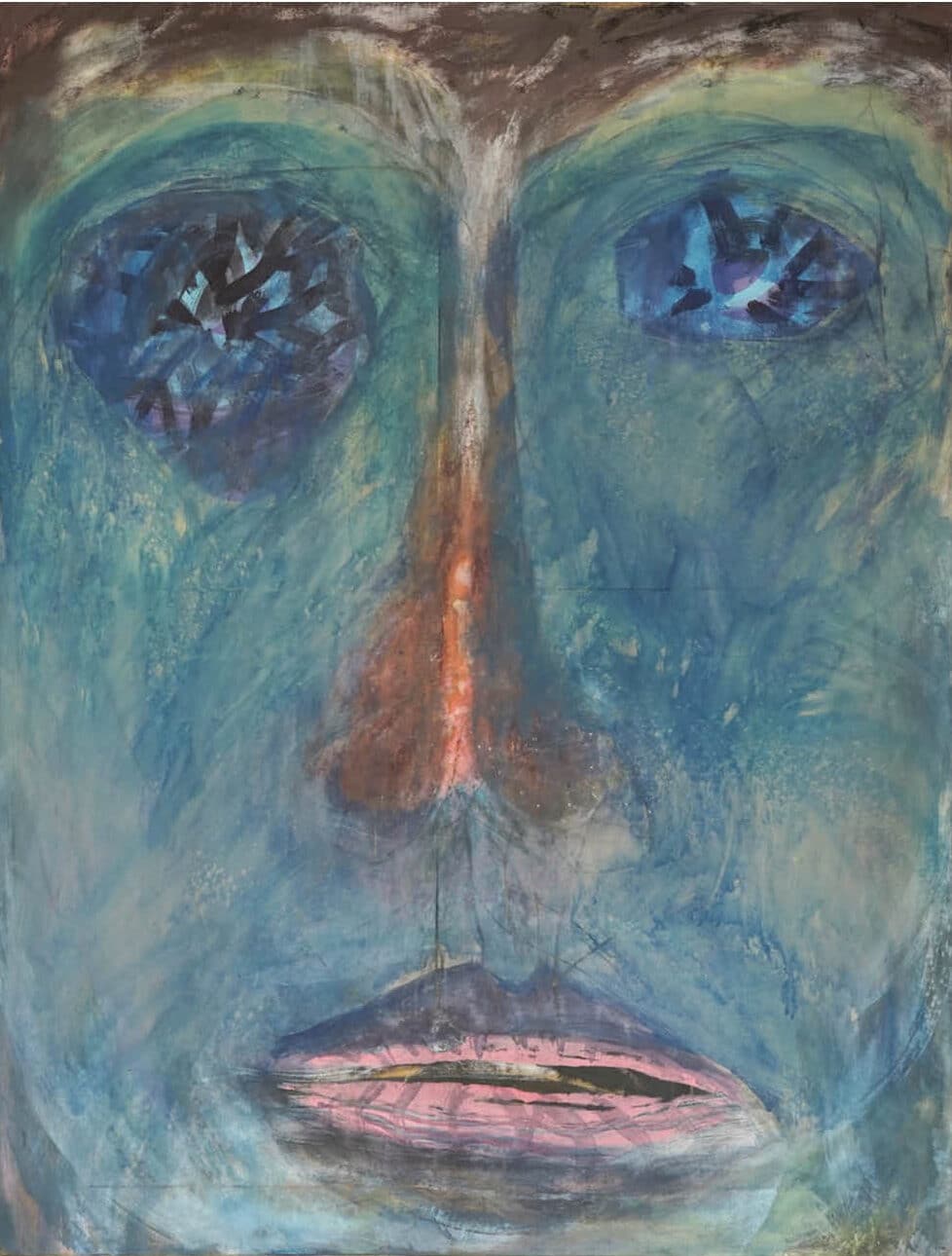
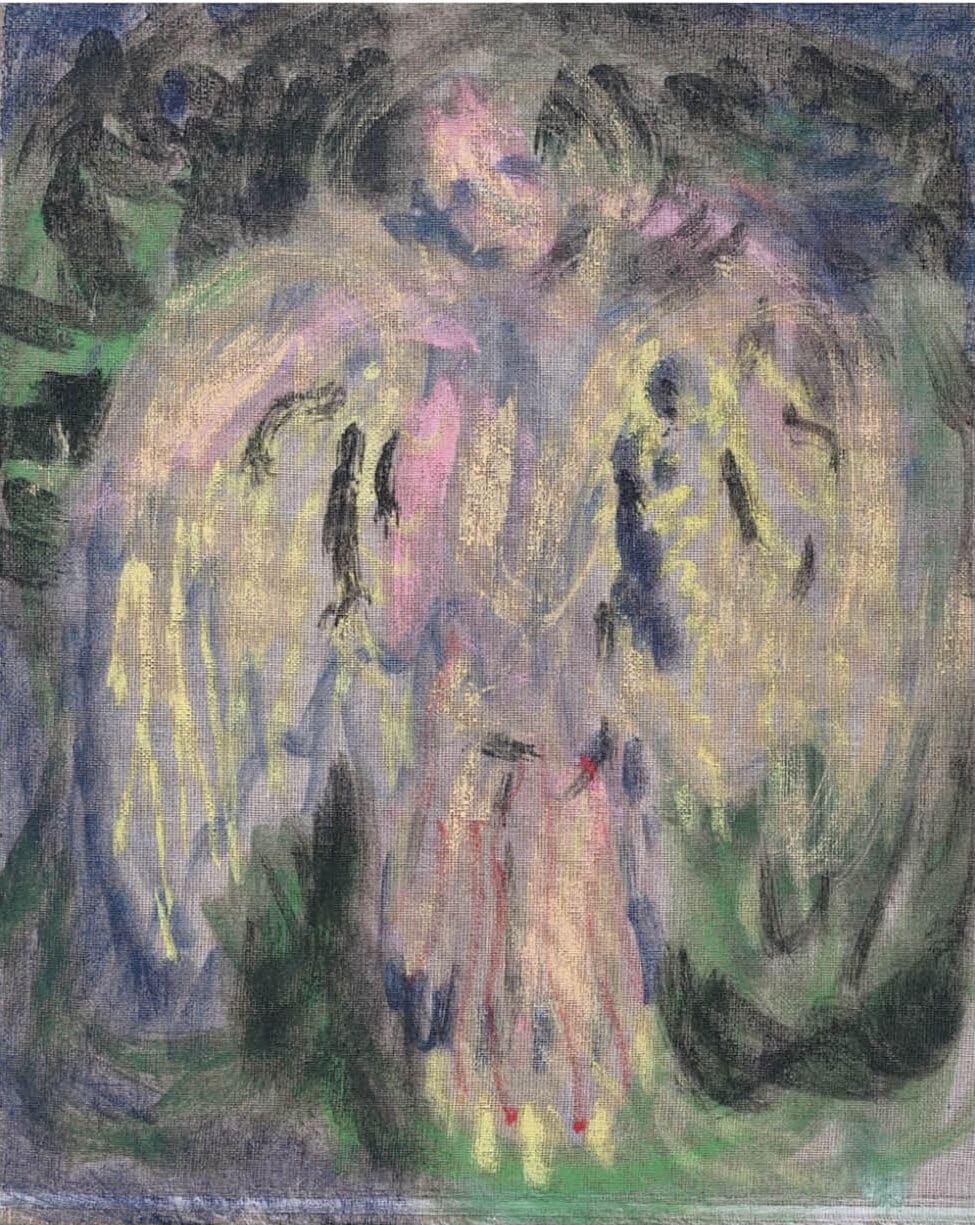
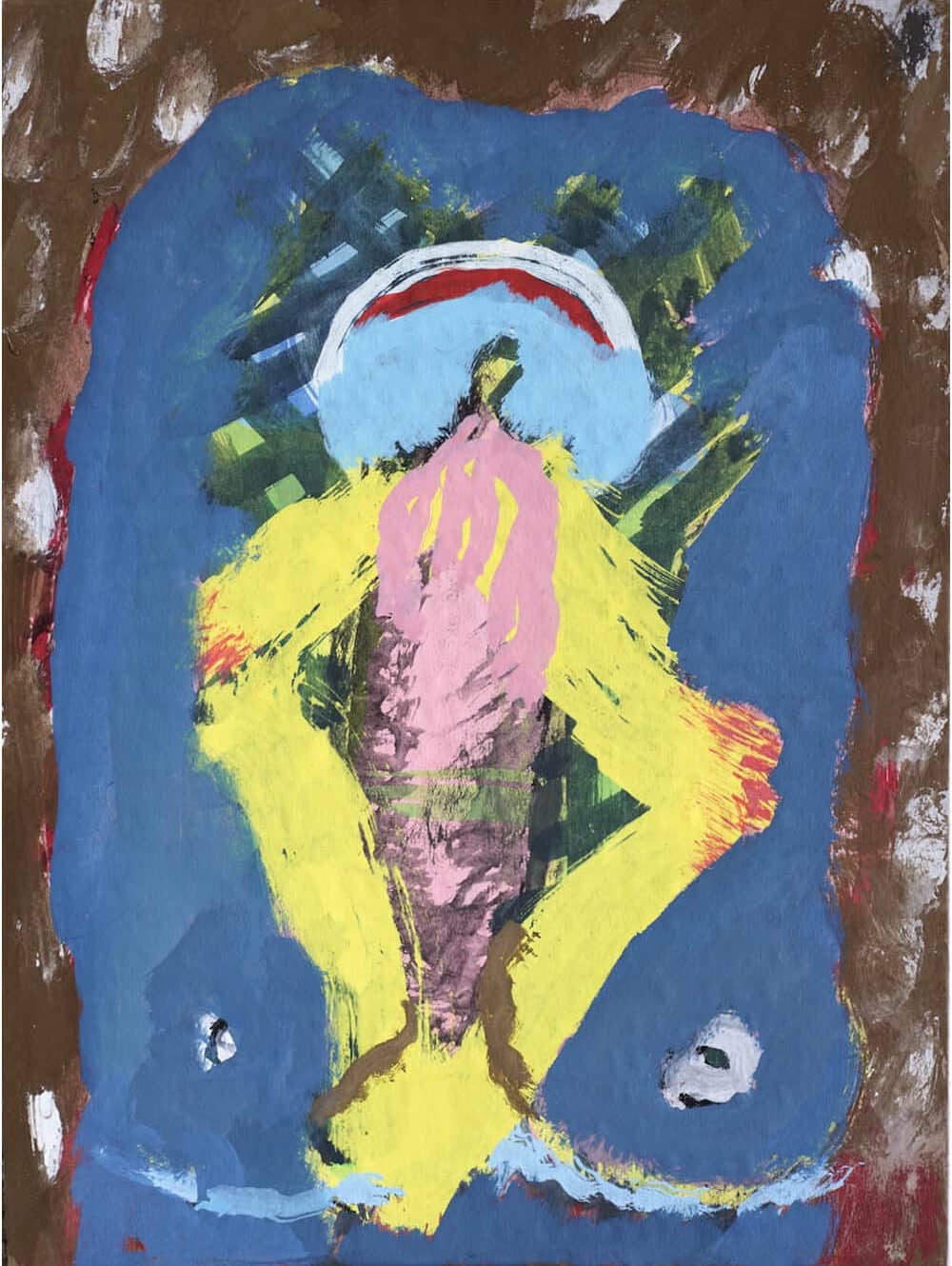
Yves Berger is a painter who lives and works in a small mountain village in the French Alps. He grew up among the farmers who surrounded his home and with the many artists who regularly visited his father, John Berger. This special context and, later, the art academy in Geneva and many journeys are the ground from which his artistic work has grown over the last 30 years. He uses visual media such as drawing, painting, monoprint, etching, and sculpture. His works have been published in various countries. He is currently trying to expand his boundaries, including those that define him as an artist.

Footnotes
- Rudolf Steiner, “Goethe as Father of a New Aesthetics,” in Art and Theory of Art: Foundations of a New Aesthetics, CW 271 (Hudson, NY: SteinerBooks, 2021), lecture in Vienna, Nov. 9, 1888, p. 20; see also, Roland Halfen, Kunst und Erkenntnis: Rudolf Steiners Ästhetik der Zukunft [Art and Knowledge: Rudolf Steiner’s aesthetic of the future] (Basel: Rudolf Steiner Verlag, 2019).
- Maja Göpel, Wir können auch anders: Aufbruch in die Welt von morgen [We can do things differently: Embarking on a journey into tomorrow’s world] (Berlin: Ullstein, 2022).





I find an ever more increasing volume of WORDS in many languages to try and describe the simplest connections, like the connections between sensation perception and conception. After reading such a plethora of WORDS I’m left with the distinct sensation of confusion from the ever increasing volume of WORDS or is it just more NOISE ? Why do simple minds become ever more complex in their panic to communicate something ever more esoteric into an ever increasing Exoterisch Welt that can hardly sustain and feed itself much longer on a living planet that was created for the survival of LIFE .. not just human but ALL LIFE. After this reading I’m more despondent about our species (human) decent into Dante’s inverted vision of heavenly decent ..