

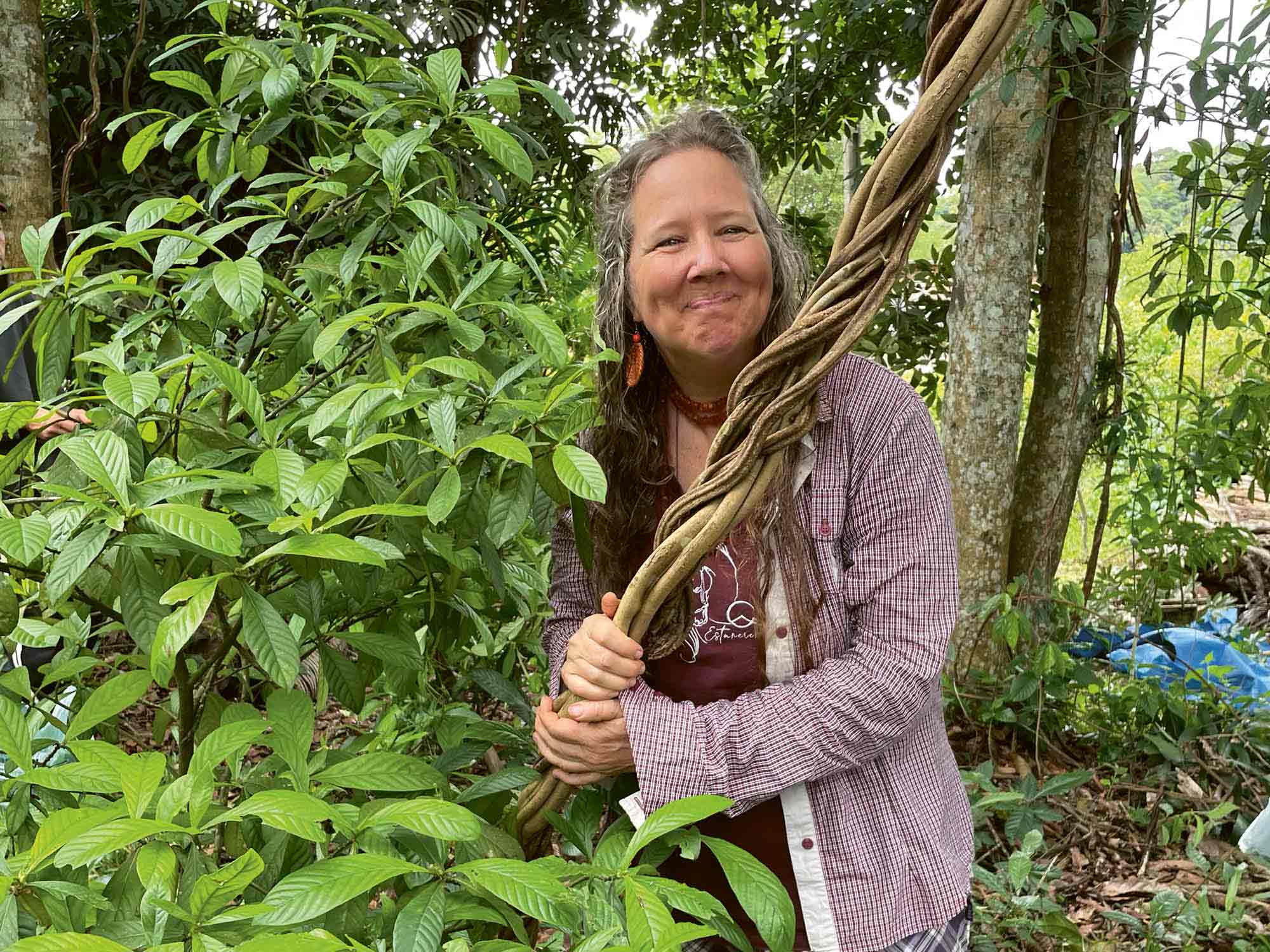
São Paulo, Brazil. 2025 is the 100th anniversary of Rudolf Steiner’s death. How does he live on in specific individuals? Regina Klein, founder, educator, and therapist at Casa Crianca Querida and Circus Sternenbrücke [Starbridge Circus], gives her answers.
Which sentence by Rudolf Steiner has particularly touched you, and why?
“[…] just think how dead the cosmos is when you look out there and see only burning bodies of gas that emit light! Think how alive it all becomes when you know that the stars are the expression of the love with which the astral cosmos acts on the etheric cosmos!”1 When I read this sentence, I was still very young. I was a biology student who despaired that there was no room for spiritual measures in science. I didn’t understand the sentence or the lecture at the time, and I remember thinking, half in dismay, half enthusiastically, “This man is reckless and crazy to seriously present such sentences as science!” I felt the sentence and its spiritual greatness, empathized with it, and knew that it was true. Rudolf Steiner captured me with the beauty and poetry and the inherent truth of his language. This sense of truth carries me to this day and has grown into an organ of perception of spiritual laws and truths. The concept and discovery of anthroposophy have, in a way, elevated to eternal spiritual life all phenomena that the science I was studying at the time had declared to be non-spiritual, “dead” so to speak, including myself. Today, I cultivate a coexistence with an infinite number of spiritual beings and understand their material splendor only as an additional gift. Thinking from the spiritual towards matter and not the other way around helps me to understand my daily work and life, because everything works first on a spiritual level and later in matter.
Contact ponte-das-estrelas@hotmail.com
Translation Charles Cross
Image Regina Klein, private






