

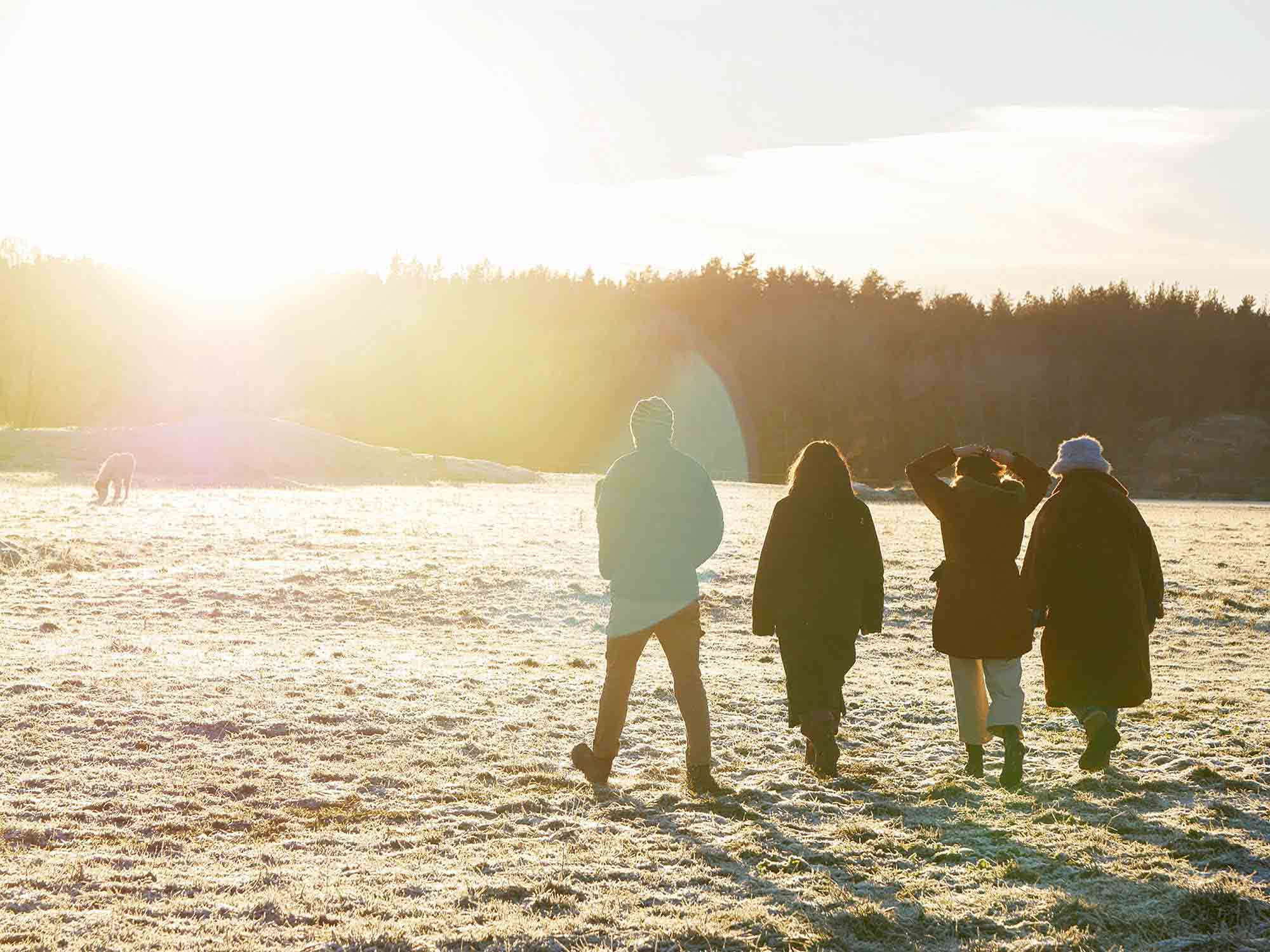
One hundred years ago, a group of young people gathered around Rudolf Steiner in Stuttgart. They felt an urgency to harmonize their own becoming with the becoming of the world. The founders of the International Youth Initiative Program (YIP) in Järna took up this impulse. Here are some experiences and insights into the concerns and impact of this shared year of study in Sweden.
“The needs of our time are burning bright and hot. Challenging materialism and opposing a monocultural society by nurturing our individualities fills me with enthusiasm—and at the same time, I feel overwhelmed and unable to know how I can actually bring about positive change.” Lilliahna, 19, Australia, YIP 2025/26
In October of 1922, a group of young people from Germany gathered for a 13-day meeting in Stuttgart. They were experiencing a sense of alienation between self-becoming and world-becoming during a time of great uncertainty, and they gathered to have a conversation with Rudolf Steiner. During this meeting, various questions arose from their deeply felt concerns: Is there a form of knowledge that can reconnect us with the world? How can we strive for genuine human-to-human relationships within our communities? What is the unique potential of human initiative?
When we look at our world today, we see that the questions asked by young people at the beginning of the twentieth century have become even more pressing for today’s younger generation. Whether near or far, whether directly or indirectly affected, young people today are growing up with the manifold consequences arising from the alienation present in our forms of relating to the world. They long to gain knowledge that doesn’t impose limitations but provides space to connect with the world, form community with others, and exercise initiative. Their longing reflects a need for new forms of education that do justice to today’s younger generations.
“It was very clear to me that I wanted to contribute to a more inclusive society, both for our fellow human beings and for future generations, but I didn’t know how I wanted to contribute.” Tessa, 26, Netherlands, YIP 2022/23
One educational space that emerged from this call is the International Youth Initiative Program (YIP) in Järna, Sweden. Closely connected to the Youth Section in Dornach, the founders were Sussie Hansen, Reinoud Meijer, Rose Nekvapil, Ani Hanalius, Pernilla Fogelqvist, and Mathias Bolt Lesniak. As young people themselves, from various backgrounds and nationalities, they heard the call of their fellow youth, seeking an educational approach that would enable them to meet the challenges of today’s world—not only on an intellectual level but also on a social, emotional, and practical level. So they worked to develop an approach that strengthens young people’s ability to take initiative within community life—both individually and collectively. YIP became a ten-month, community-based educational program for people aged 18–28 from all over the world. Each year, a group of 20–40 young people lives and learn together on the grounds of the anthroposophical campus in Järna—surrounded by the Baltic Sea, biodynamic fields, and Swedish forests. With this year’s eighteenth YIP group, over 600 people have now participated since the program began in 2008. They now form a global network of alumni. The following reflections arise from the lived experiences of these young people who have participated in YIP in the past, as well as those who are currently part of the program.
Knowledge That Connects with the World
“Growing human beings have a desire to connect with the world not only with their heads but also with the rest of their bodies—to learn to think, to learn to experience the world not only with their head, but with their whole being.”1 The transition to adulthood is usually characterized by an individual growing into a unique personality through their encounters with the world. Accompanied by a multitude of experiences—leaving the parental home, encountering new people, ideas, and ideals—the young adult’s inner life is nourished and shaped by impressions from their surroundings and by the thinking capacity of their inner world. In this interplay, their sense of self deepens, often accompanied by questions such as: Who am I? What is my place in the world?
One hundred years ago, the approach to understanding the world was described as a type of knowing rooted in objectivity and causality, often called cognitive—even “dead”—intellectualism. This form of knowledge, limited as it is exclusively to the realm of the head, ultimately cuts people off from the world. Intellectualism cannot reach all parts of the human organism; it “isolates” human “wishes, impulses of will, and capacities for desire.”2
“We live in a golden cage, trapped in our own thinking. The door is open to everyone, but you have to take the step towards freedom yourself. We have to actively decide to say ‘yes’ to life.” Alva, 20, Austria, YIP 2025/26
Many YIP participants experience a gap or discrepancy between seeing the problems in the world and knowing how to address them through action. Or, they may logically and intellectually understand the flood of information concerning the pressing needs of world realities, but their feeling life cannot find a relationship with this intellectualism and so doesn’t motivate their will to act. In extreme cases, some participants express the belief that the planet would be better off without humans and limit their own actions to a minimum so as, at least, not to have a negative impact.
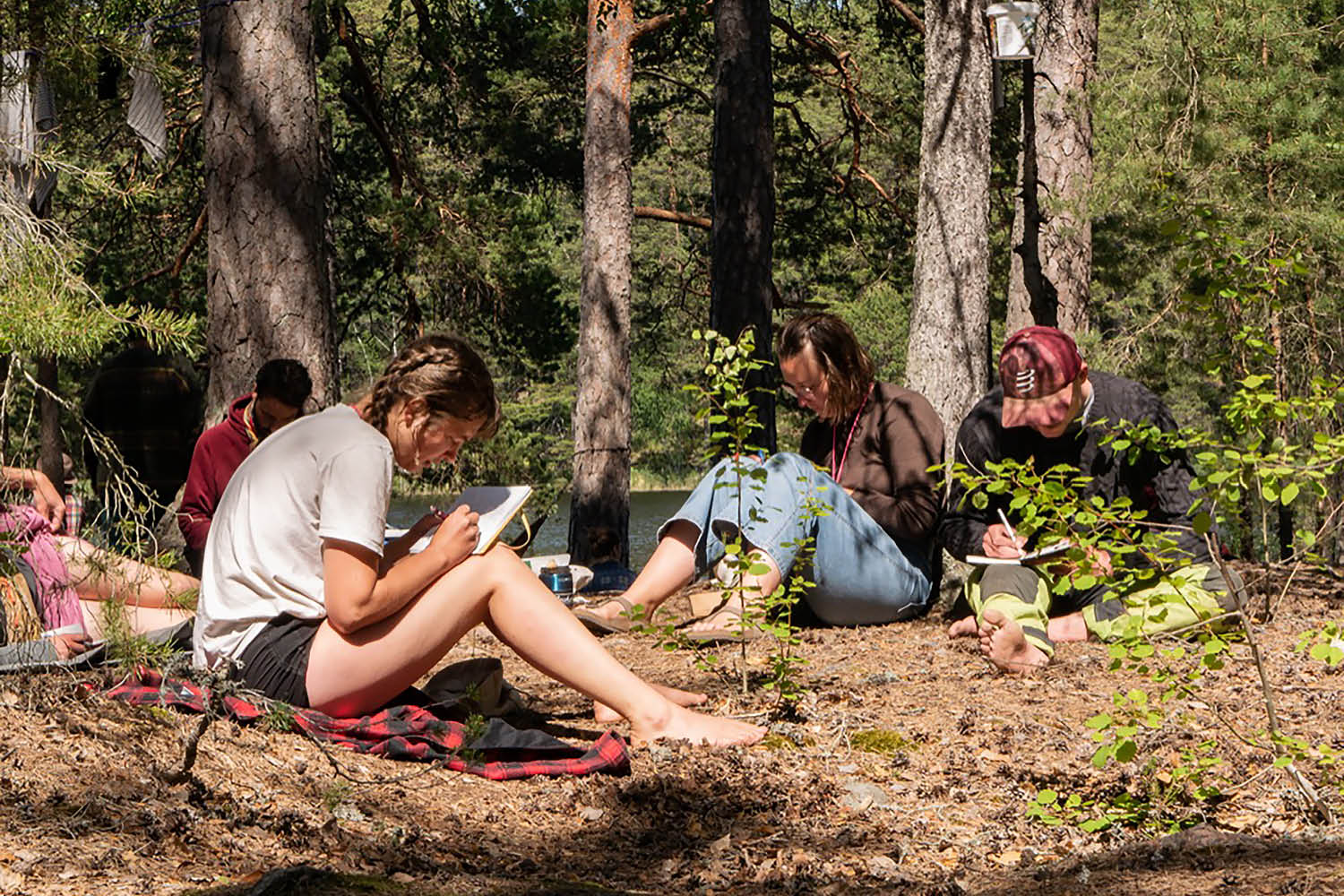
At YIP, the educational ethos is to engage the whole person in their three fundamental gestures: thinking, feeling, and willing. The curriculum offers courses that intellectually support participants in understanding current global realities—ecological crises, social injustice, and artificial intelligence—while fostering personal inner consciousness through biographical work, storytelling, and the visual arts. This bridge between the outer and inner worlds—inside and outside the classroom—naturally creates a learning space in which participants ask themselves: How do we relate to what is happening in the world? How is what is happening in this world mirrored in us? What positive influence can I have on my immediate environment?
Human Culture
“One searches for something. [. . .] The human being has lost the human being, and so the human being is searching again for the human being.”3
The young people in Stuttgart knew that human beings in Central European societies had become increasingly alienated from each other and from each other’s experiences. They observed that many were not open to the perspectives of other people and preferred simply to stay with their own. They saw the willingness to view the world from the perspective of other people and to integrate a diversity of viewpoints into a shared world as a challenge of their time.
“Allowing others the freedom to do things differently opened up something inside me. Understanding that differences are allowed to exist helped me know the potential in every person.” Michael, 25, UK/Cyprus, YIP 2019/20
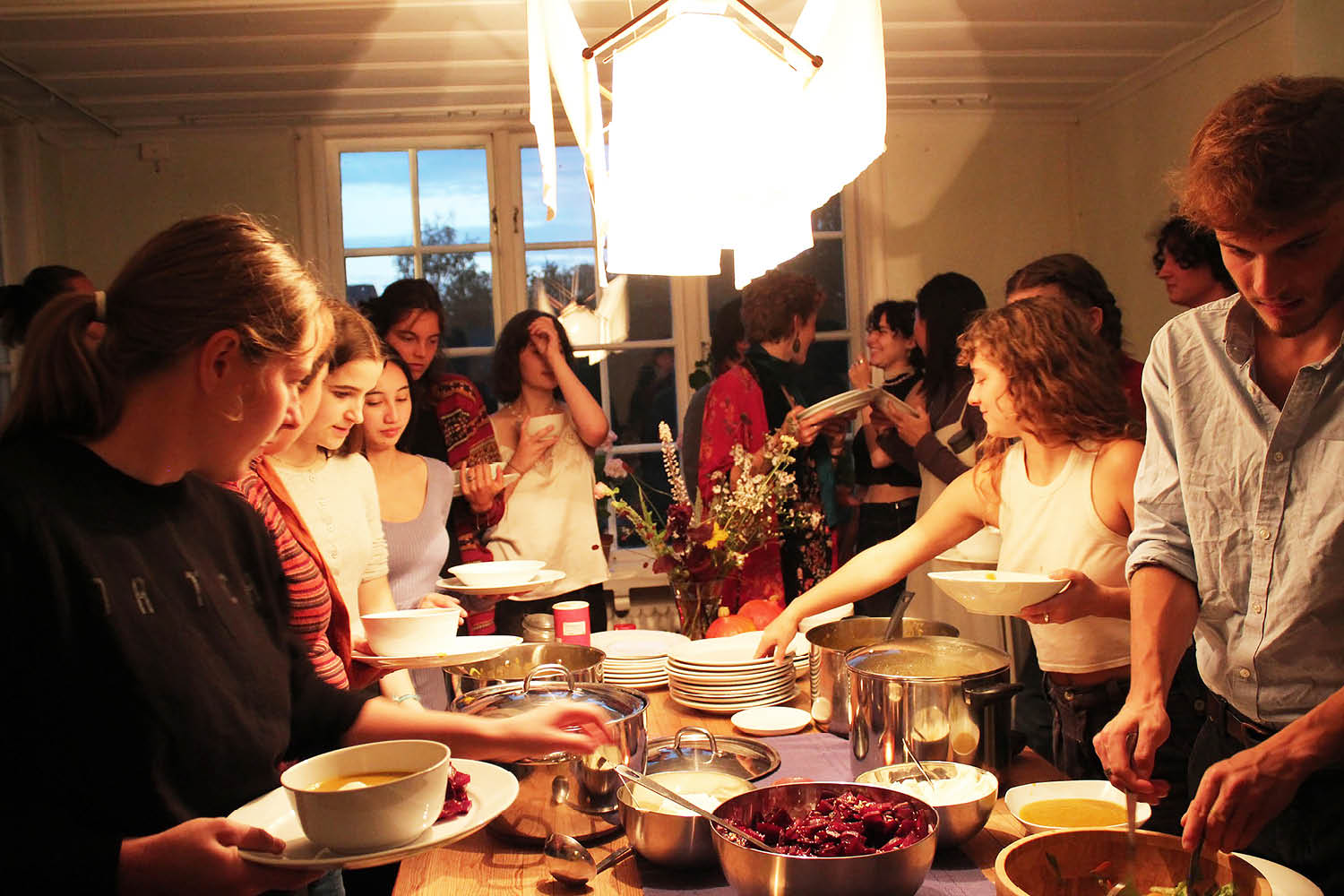
Over the course of each YIP year, twenty to forty young people from different cultural backgrounds, with different native languages, practices, and habits, all live together in one house and form a common culture. Their day begins with an hour of service—in the vegetable garden, cleaning the common areas, or cooking for the subsequent communal breakfast. Before classes begin, participants gather in a circle and start the day singing together and making announcements for the day ahead. A shared space for reflection and contemplation on community life is embedded in the weekly rhythm. It’s understood that community is shaped not only by laughter, friendship, and joy, but also by obstacles, conflicts, and frustrations. The dynamics of the larger global community also naturally flow into the YIP community. Making joint decisions, balancing leadership and support roles, and creating space for different realities and opinions opens up insights into the breadth of human experience and the diverse ways in which one can approach life. When we can see through others’ eyes and recognize their expertise in certain areas of human experience, numerous perspectives find a place in the community. Wherever we are forming a community, the question always arises: How do I balance my personal freedom with responsibility for the collective?
The Role of Initiative
“What I wish is that you have something in your hearts, and that you implement what you carry in your hearts. Whatever people carry in their heads, they lose along the way. But what they take into their hearts, their hearts preserve in all spheres of influence into which people will be placed.”4 The 13-day discussion in Stuttgart led to the realization that by finding a deeper self-awareness and striving to connect with the flow of world development, people have the potential to develop a unique and authentic inner impulse. Young people were encouraged to awaken their impulses and carry them into the world, especially when facing external and internal challenges.
One hundred years later, facing a growing number of modern challenges, this call for human initiative is more urgent than ever. “An initiative is ideally a conscious act of free will in the service of the collective,” says Reinoud Meijer, co-founder of YIP. Initiative is at the heart of the program. At YIP, initiative is understood as a combination of authentic self-expression and service to something greater than the individual self.
One of the ways in which young people at YIP explore this is through a “personal initiative.” This self-designed project invites each individual to explore a question that is inwardly close to them and to which they feel called. Regardless of whether the question is far-reaching or more local, each individual seeks ways and forms to ensure that his or her initiative can be shaped. Towards the end of the year, a period of three to four weeks is set aside for working on the initiatives individually and collectively. This gives rise to a wide range of activities: developing a business plan for the future, teaching amateur dancers a self-choreographed dance, practicing guitar for hours on end to become a flamenco artist, or working in the woodshop to build a beehive. In the final presentation week, each person presents the personal journey they entered with their guiding question. This week is often referred to as “stargazing week,” as participants observe one another and express their genuine impulses.
Between Past and Future: The Present
The 600 individuals who traveled to Sweden and spent ten months of their lives together in a learning community, then have to move on after completing their YIP year. Today, they are scattered across the globe and carry forward their impact in a variety of ways. When asked what made the deepest impression on them during their time at YIP, many respond that it wasn’t actually any particular course, teacher, or topic that stays in their memory. It’s their impressions of the other young people they met and the way they learned about the world and themselves through interacting with, respecting, and appreciating each other’s differences.
One hundred years ago, a group of young people gathered in Stuttgart, moved by the urgency to align their own becoming with the becoming of the world. A century later, the same impulse still calls: for every young person to awaken and bring forth what lies within their hearts. YIP offers a living embodiment of this call—a space where today’s generation can explore their authentic selves and bring their unique gifts to the unfolding of the world.
More The International Youth Initiative Program
Translation Joshua Kelberman
Images Youth Initiative Program (YIP) in Järna, Sweden







wouldn’t it be nice if they had a YIP course for old people .. imagine living on earth for 8+ decades and doing all the task for modern survival .. yet never having discovered your own being and what it wanted to do …?