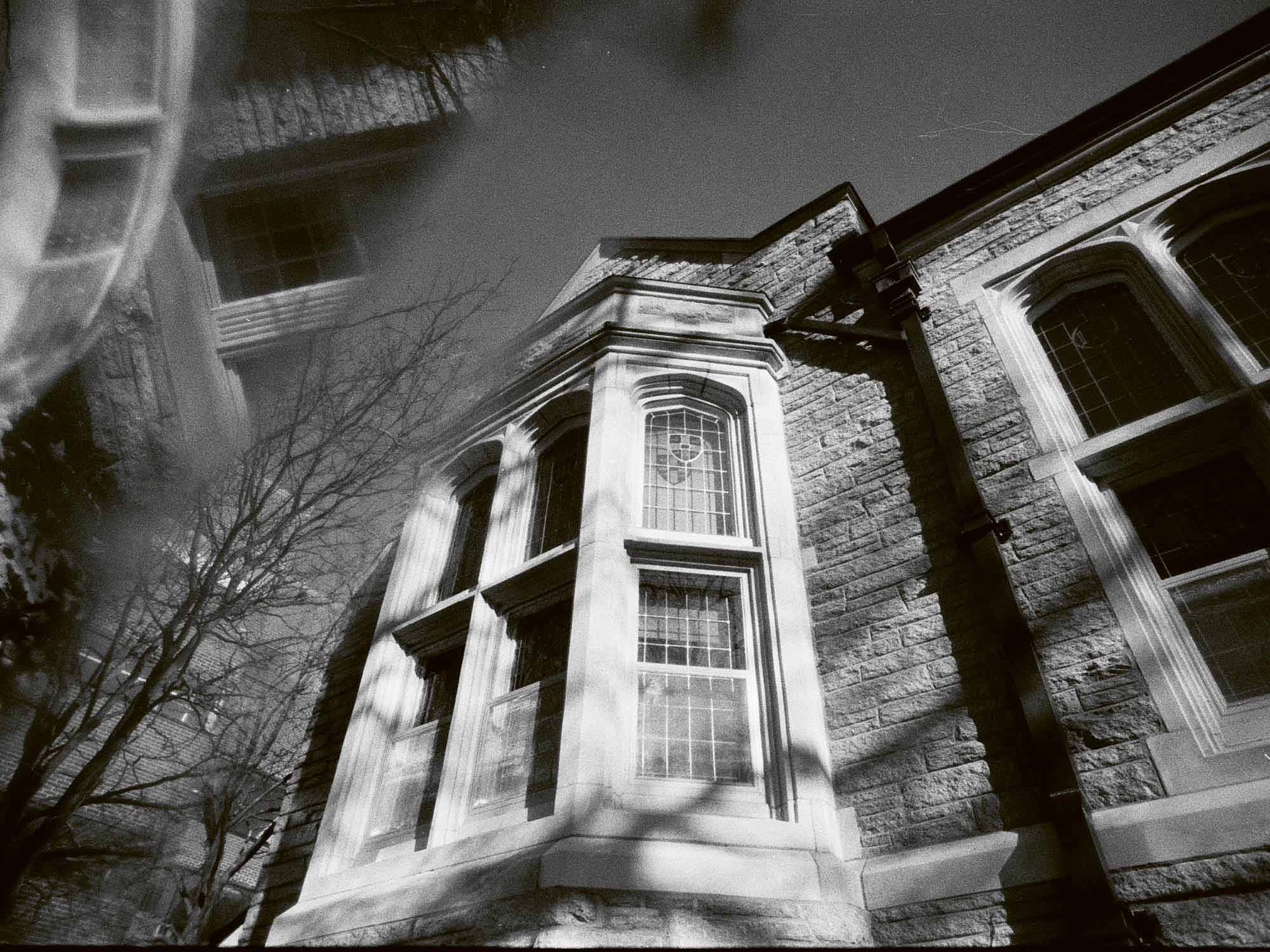
The 100 Years Rudolf Steiner conference was the first time that the annual conference of Harvard’s Program for the Evolution of Spirituality focused on a single individual and a single spiritual stream. The choices made in planning this academic event were a testament to the robustness, resilience, and richness of Rudolf Steiner’s life and work in the world. Organizer Dan McKanan reflects on the initiative.
As faculty director of the Program for the Evolution of Spirituality (PES), it was my honor and delight to host the 100 Years Rudolf Steiner conference at Harvard Divinity School (HDS). The conference was not, however, my idea: I am grateful to Aaron French and Henry Holland for persuading me to take this on. They participated fully in shaping the program and are now planning to publish many of the presentations. PES has hosted many conferences featuring multiple spiritual traditions, including anthroposophy, but this was the first time that we devoted an entire conference to a single tradition. PES’s student workers, Matthew Ceurvorst and Sadie Trichler, were deeply involved in every aspect of conference planning and played a vital role in enabling hundreds of people to participate both in person and remotely.
Encountering Openness
We decided to hold this conference because we believed that HDS was uniquely positioned to create an inclusive gathering space for committed anthroposophists, participants in anthroposophical initiatives, neutral scholars of esoteric spirituality, and advocates of what is sometimes called “critical Steiner studies.” We knew that bringing such diverse perspectives together could make the conference experience difficult for some people. I suspect that almost every attendee encountered some ideas that they considered problematic, biased, or downright offensive. But I was pleased to observe that almost everyone met such ideas with genuine openness. This was true, I think, both for people who regularly practice the six subsidiary exercises and those who don’t!
In our effort to ensure that everyone would feel equally welcome, we made one difficult choice. All our past PES conferences have included hands-on workshops, artistic performances, and opportunities for ritual participation, as well as academic papers. This was inspired, in part, by my experiences of conferences at the Goetheanum, which offer a wonderful blend of embodied activity and cerebral reflection. But for the Steiner conference, we adhered more closely to academic conventions. In part, we worried that non-anthroposophists might find the other activities off-putting. And we wanted to demonstrate that Steiner’s work is a fitting subject for the most rigorous scholarship. Fortunately, local and national anthroposophical leaders developed a wonderful set of pre- and post-conference events, both artistic and liturgical, that greatly enriched the experience.
One special treat for me was having so many leaders from the Goetheanum offer deeply researched, creative, and dialogical papers. It was impressive to see people who carry profound administrative responsibilities share the joy of finding a new insight. Clearly, the School of Spiritual Science takes its academic responsibilities very seriously and has much to offer those of us who work in more mainstream academic institutions.
More 100 Years Rudolf Steiner, Harvard Divinity School Program for the Evolution of Spirituality
Video 100 Years Rudolf Steiner Conference Interview Sessions
Title image Harvard Divinity School, Photo: Garret Harkawik